Book Cover Design Services for Authors Who Intend to Sell
Your cover is the first thing a reader sees and the last thing they forget. We design custom covers for nonfiction books, built to win the click at thumbnail size and to hold up in print.
Free strategy session · NDA-backed · You keep 100% of royalties


The short answer: what our book cover design services include
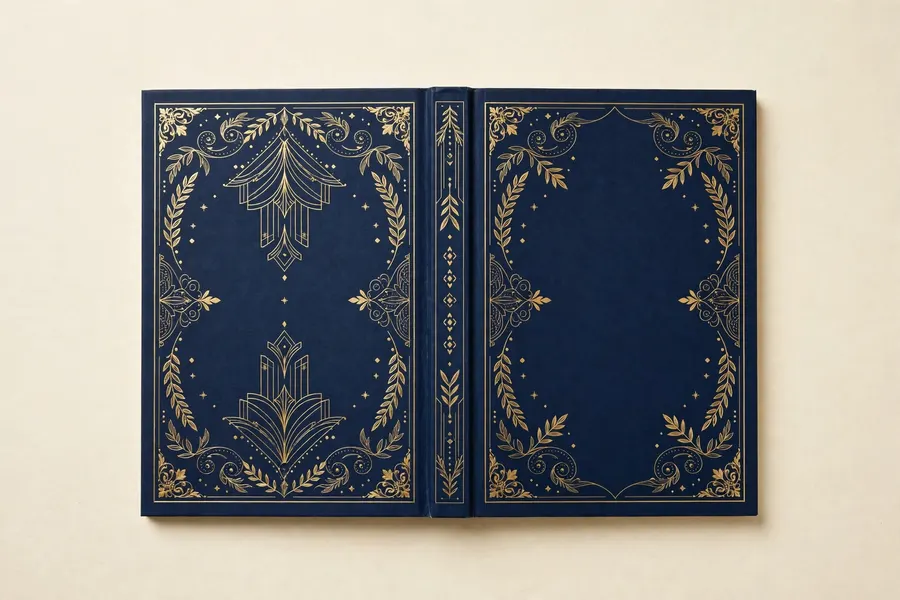
Book cover design services at Hafiz Publications mean a custom cover for your nonfiction book, designed in the same studio that edits, formats, and publishes it. You receive a front cover for ebook, and a full print wrap — front cover, back cover, and spine as one print-ready file — built to Amazon KDP's exact specifications.
Every cover starts with research into your category. We look at what the best-selling books in your genre actually look like, then design a cover that speaks your reader's visual language — without copying anyone else's book.
The spine width is calculated from your final page count and paper stock, not guessed. The title is tested at thumbnail size, where most buying decisions are made. And the cover is checked against KDP's file rules before it ever reaches upload.
This page is the commercial companion to our guide on why your book cover is your most important marketing tool. The guide explains why covers sell books; this page is where you hire the design. If you want the thinking first, read the guide. If you want the cover, book a strategy session.
What do you receive with a book cover design?
A book cover is not one file. It is a set of files, each made for a different place your book will appear. An ebook cover lives on a screen. A print cover wraps a physical book. They share one design, but they are built to different rules.
Here is exactly what a cover design engagement delivers, and the rules each file must meet.
Ebook front cover
For Kindle and ebook stores
Your front cover as a standalone file, sized to Kindle's rules: 2,560 by 1,600 pixels at minimum, in the 1.6 to 1 ratio, as a JPEG or TIFF in RGB. No spine, no back cover — the ebook file is the front only.
Full print wrap
For paperback and hardcover
Front cover, back cover, and spine as one continuous file, built at 300 DPI with 0.125 inches of bleed on every outer edge. The file is sized to your exact trim size and page count.
Spine, calculated
From your page count
Spine width is arithmetic, not a guess. We calculate it from your final page count and paper stock, and set the title and author name to read top to bottom at real size.
The KDP specifications your cover must meet
| Format | What KDP requires | What we deliver |
|---|---|---|
| Ebook cover | 2,560 x 1,600 pixels minimum, 1.6:1 ratio, JPEG or TIFF, max 50 MB, RGB, front cover only | A front-cover file built to those exact numbers |
| Print cover | One wrap file: back + spine + front, minimum 300 DPI, 0.125" bleed on all outer edges | A wrap file sized to your trim size, page count, and paper stock |
| Spine text | KDP prints spine text only on books over 79 pages | Spine text only where the rules allow it, set in the largest type that fits |
| Trim sizes | Common sizes: 5" x 8", 5.5" x 8.5", 6" x 9", 7" x 10", 8.5" x 11" | Panels sized to your trim: a 6" x 9" book gets 6.125" x 9.25" panels |
Our book cover dimensions guide walks through every trim size and the full spine-width arithmetic. The table above is the short version. The point is simple: a cover that ignores these numbers gets rejected at upload, and a cover built to them sails through.
That is the first job of a professional cover. Before it can sell your book, it has to pass the printer.
Tell us your trim size and page count — we will confirm what your wrap needs before you commit to anything.
Real books from the portfolio, each with its own cover designed in this studio. Business, self-help, health, and memoir — the genres we publish most.






A sample of the 300+ books published by the studio. See the full portfolio
How does genre decide the design of your book cover?
Walk into any bookshop and spend five minutes looking at the shelves. You can identify most genres without reading a single title. The colours, the type, and the imagery are so consistent within each genre that they form a visual language readers speak without thinking.
That language is not an accident. It grew out of decades of market feedback. Publishers learned what turns browsers into buyers in each genre, and those lessons became conventions. Break them, and the right readers scroll straight past your book.
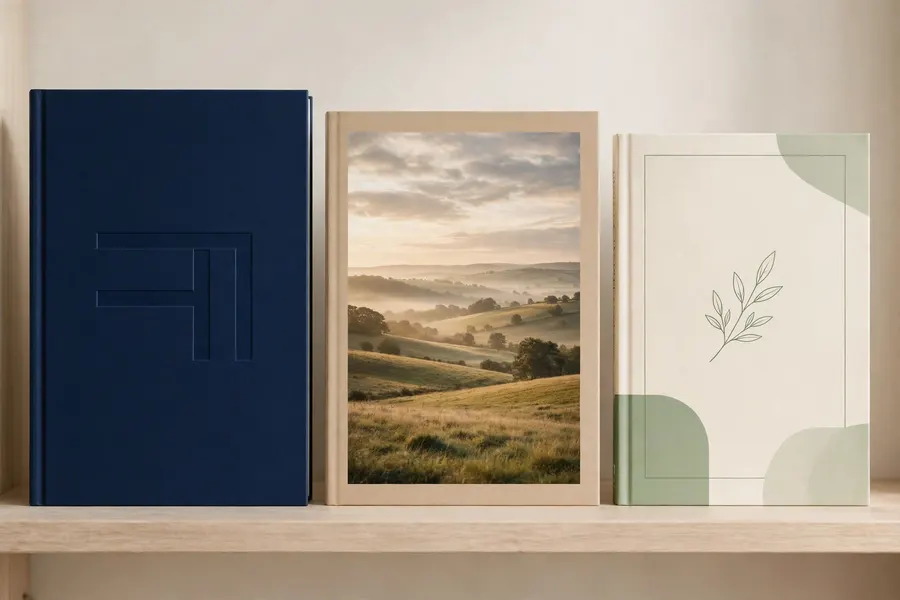
Your cover is a signal. It tells a stranger, in under two seconds, what kind of book this is and whether it is for them. Get the signal right and the right reader stops. Get it wrong and no amount of advertising fixes it.
That is why every cover we design starts with the genre, not with a blank page. The design follows the reader's expectations first. Then it earns its difference inside those expectations.
Business and self-help
Bold, clean, authoritative
Large bold type, often taking up most of the cover. Simple high-contrast palettes: navy, black, red, white, gold. Minimal imagery and a prominent subtitle, because the promise is everything.
Memoir and personal story
Warm, honest, personal
Evocative photography, warmer palettes, and serif or humanist type. The cover should feel like a chapter of the book itself, and the author's photo often appears because the author is the product.
Health and wellbeing
Fresh, calm, credible
Clean layouts, fresh colours, and imagery that signals the outcome without making a medical promise. The cover earns trust at a glance, then lets the subtitle carry the specifics.
Breaking the rules
A thriller with a bright white cover can be striking if it is done perfectly. But that choice must come from knowledge, not ignorance. Know the convention first, then decide — deliberately — whether to break it.
Our guide to book cover design rules by genre works through these conventions in full, genre by genre. The covers in our portfolio show them in practice: compare the bold business covers with the warm health titles and the difference is visible in seconds.
Will your cover still sell at thumbnail size?
Most authors judge their cover at full size, on a large screen, in a quiet room. Readers never see it that way. On Amazon, your cover appears at roughly 80 by 120 pixels on a phone screen. That is the size that decides the click.
Readers make buying decisions in under two seconds. In those two seconds they are not reading your title or your author name. They are registering mood, category, and credibility through visual pattern recognition.
So we test every cover the way readers will actually meet it. Shrink it to 150 pixels wide — roughly how it appears in Amazon search results on a phone. If the title is not readable and the design is not striking at that size, it does not matter how beautiful the full-size version is.
Five things decide whether a cover passes that test. Weak covers fail at one or more of them.
Typographic hierarchy
Your title must be readable at thumbnail size. Bold, high-contrast type that takes up real space on the cover. Many first-time authors make the title too small because it looks elegant. Elegant does not sell at 80 pixels wide.
Colour contrast
High contrast wins every time. Dark backgrounds with light type, or light backgrounds with dark type. Muddy middle-ground palettes disappear on screen.
Genre imagery
The image must instantly communicate the reading experience. A moody cityscape for a thriller, a clean desk for productivity, a calm landscape for a memoir. The right image does the genre's talking.
Subtitle readability
For nonfiction especially, the subtitle sells the promise. It needs to be legible at moderate sizes, even when it is smaller than the title.
Author name treatment
If you are a known name, make it big. If you are debuting, keep it tasteful but present. It builds your brand for the next book.
The 150-pixel rule
Before any cover ships, we shrink it to 150 pixels wide and read it like a shopper would. If it fails there, it goes back to the desk — no matter how good it looks at full size.
Our breakdown of the anatomy of a bestselling nonfiction book cover shows these five elements working together on real bestsellers. And our guide to how to test your book cover before you publish lists five methods for testing a cover against real readers before launch.
Bring your current cover, or your manuscript — we will tell you honestly what the thumbnail test would say about it.
How does our book cover design process work?
A cover goes wrong most often before the design starts: the brief is vague, the genre is ignored, or the print specifications are never checked. Our process is built to prevent all three. It has six steps, and the first one is a conversation.

Brief
Research
Concepts
Selection
Refinement
Print Pre-Check
The brief
You tell us what the book is about, who it is for, and what it must promise. We ask about your genre, your audience, and the covers you admire — and the ones you do not. Our guide to briefing a cover designer lists everything a good brief covers.
Category research
We study the best-selling books in your category: their type, their colours, their imagery, and what the top of the category has in common. The cover must belong on that shelf before it can stand out on it.
Concept directions
We design distinct concept directions for your book — different routes, not small variations of one idea. You react to real directions, not to a single take-it-or-leave-it design.
Your selection
You choose the direction that feels right for your book. We test it at thumbnail size together, because a concept that only works at full size is not a finished cover.
Refinement
We refine the chosen direction: type, spacing, colour, imagery, and the back-cover layout. You review each round and ask for changes. The cover is not final until you approve it.
Print pre-check and final files
Before delivery, the cover is checked against KDP's specifications: trim size, bleed, resolution, spine width, and file format. Only then do you receive the final ebook and print files.
The cover is designed by the same founder-led studio that writes, edits, and publishes the books in the portfolio above. That matters because the designer knows what the interior looks like, what the trim size is, and where the book will be sold — before the first concept is drawn.
A cover designed in isolation from the book is a poster. A cover designed inside the publishing process is part of the product.

A founder-led studio: the covers are designed by the same studio that writes and publishes the books, under one standard.
Step one is a conversation: tell us about the book, and we will tell you what its cover needs.
Why are the cover, the spine, and the interior done together?
A print cover is not a picture. It is a measurement. The spine width depends on the final page count and the paper stock. The back cover depends on the trim size. And none of those numbers is final until the interior is laid out.
That is why cover design sits inside the same production as formatting and publishing here, not in a separate shop. The designer works from the real page count, not an estimate. The spine is calculated from the finished book.
Spine width: a worked example
| Book | Calculation | Spine width |
|---|---|---|
| 250 pages, black and white | 250 x 0.0025 inches per page | 0.625 inches |
| 300 pages, white paper | 300 x 0.002252 inches per page | 0.676 inches |
| 300 pages, cream paper | 300 x 0.0025 inches per page | 0.75 inches |
A spine under 0.125 inches cannot carry text in practice, and KDP prints spine text only on books over 79 pages. Our book spine design guide explains every rule — what belongs on a spine, what stays off it, and why the bottom inch is the worst place for anything important.
Done in the wrong order — a cover designed before the manuscript is final, formatting applied to a text that still changes — the work gets redone and the author pays twice.
Done in the right order, each step builds on the last: the edited manuscript moves into interior formatting, the cover is built to the finished book's measurements, and then the book goes to Amazon KDP publishing.
If you only need the cover, that is fine too. Bring us the finished manuscript with its page count and trim size, and the cover is designed to those numbers. The cover is yours, the book is yours, and nothing about the process ties you to the rest of the pipeline.
What does book cover design cost?
The honest answer is that it depends, and any page that gives you a single number is selling one package or guessing. Three things move the quote: the formats you need, whether the book is a single title or a series, and whether the cover is a standalone design or part of a full book project.
An ebook-only cover is one job. A full print wrap with a calculated spine is a bigger one. A series of covers that must look like they belong together is bigger still.
The formats you need
An ebook front cover alone costs less than a full print wrap with spine and back cover, because it is one file instead of a measured three-part build.
Single book or series
A series needs a visual system that holds across every title, not one cover. The first cover sets the system; the rest follow it.
Standalone or full book
A cover designed inside a full ghostwriting, editing, and publishing project shares the research and the production, which changes the scope of the quote.
What we can promise is how the quote works. After a strategy session, you receive a clear fixed-price quote for the agreed scope, before you commit to anything. There is no surprise later, and nothing is added without your agreement.
For context on what designers charge across the market, our guide on why your cover is your most important marketing tool includes a realistic market snapshot for 2026. Read it before you compare quotes, so you know what a quote should include — and what its absence means.
One warning is worth repeating here: a quote far below the market is not a bargain, it is a signal. A cover at a fraction of the going rate usually means a template, a contest entry, or a design that was never tested at thumbnail size.
The cheapest cover is the one you pay for twice — once to the person who made it, and once to the person who redesigns it after it fails on Amazon.
What if your cover already exists — and is not working?
Many authors come to us with a finished book and a cover that is not earning clicks. The book is good. The cover is the problem. That is a different job from designing a cover from scratch, and it starts with an honest diagnosis.
We test the existing cover the same way we test a new one: at thumbnail size, against its genre's conventions, and against the five elements that make a cover convert.
Then we tell you what is actually wrong — the type is too small, the genre signal is confused, the contrast fails on screen — and whether the cover needs a redesign or a careful refinement.
Sometimes the answer is a new cover. Sometimes it is a stronger title treatment and a cleaner layout on the cover you already have. Either way, the diagnosis comes before the design, so you do not pay for a redesign your book did not need.
DIY vs professional cover design
Our comparison lays out the trade honestly, including when doing it yourself is the right choice. Read the comparison
Test your cover before you change it
Five methods for testing a cover against real readers before launch, so a change is a decision, not a guess. See the five methods
If your book is already published and underperforming, start with the test. It tells you whether the cover is the problem before you spend anything on fixing it.
Key takeaways
- Your cover is judged at thumbnail size — roughly 80 by 120 pixels on a phone — and readers decide in under two seconds, so the design must work small before it works large.
- A print cover is one measured file: front, back, and spine, built at 300 DPI with 0.125 inches of bleed, and the spine width is calculated from your page count and paper stock.
- Genre decides the design. Business covers lead with bold type, memoirs with warmth and photography, health covers with calm and clarity — and breaking the convention must be a deliberate choice.
- Cover design belongs inside the publishing pipeline, after the manuscript is final, so the spine and trim are calculated from the finished book rather than guessed.
- Every engagement at Hafiz Publications starts with a free strategy session, followed by a fixed-price quote before you commit — and the cover, like the book, is yours in full.
Frequently asked questions
You receive a front cover for ebook, built to Kindle's rules at 2,560 by 1,600 pixels as a JPEG or TIFF, and a full print wrap — front cover, back cover, and spine as one print-ready file at 300 DPI with 0.125 inches of bleed — sized to your trim size and page count.
You do. The cover is designed for your book, and the book is yours in full. You keep 100% of your royalties and full ownership of the book, cover included, and the engagement is NDA-backed throughout.
Yes. Bring the existing cover and we will test it at thumbnail size, against your genre's conventions, and against the five elements of a high-converting cover. Then we will tell you honestly whether it needs a full redesign or a careful refinement — and quote only the work it actually needs.
The manuscript or a summary of it, your genre and audience, the title, subtitle, and author name exactly as they should appear, and any covers you admire. Our guide to briefing a cover designer lists everything a good brief covers, and the strategy session fills in the rest.
One design, two files. The ebook file is the front cover only, built to Kindle's size and file rules. The print file is the full wrap — front, back, and spine — with the spine width calculated from your final page count and paper stock.
Yes. A full-book project includes interview-led ghostwriting, editing and proofreading, cover design, interior formatting, and Amazon KDP publishing, all inside the same studio. The cover is designed to the finished book's real measurements, because the same studio produces the interior it wraps.
Your book's first impression is a design decision. Let's make it a good one.
Book a free strategy session and tell us about the book. We will tell you what its cover needs, what the print specifications require, and what a fixed-price quote would look like — before you commit to anything.
Book Your Strategy CallThe 7-Figure Book Blueprint — our free guide to turning a book into authority and clients.