Know exactly what to practice today
Four weekly practice tables tell you what to do, how much time to set aside, and which easier option to choose if you need it. There is nothing to plan the night before.
A 28-Day Beginner Program
A gentler way to start moving, one short practice at a time
Start with an easy breath and a few deliberate steps. This 28-day beginner program shows you what to practice each day, with large-print instructions, illustrated movements, and video demonstrations you can follow at your own pace.
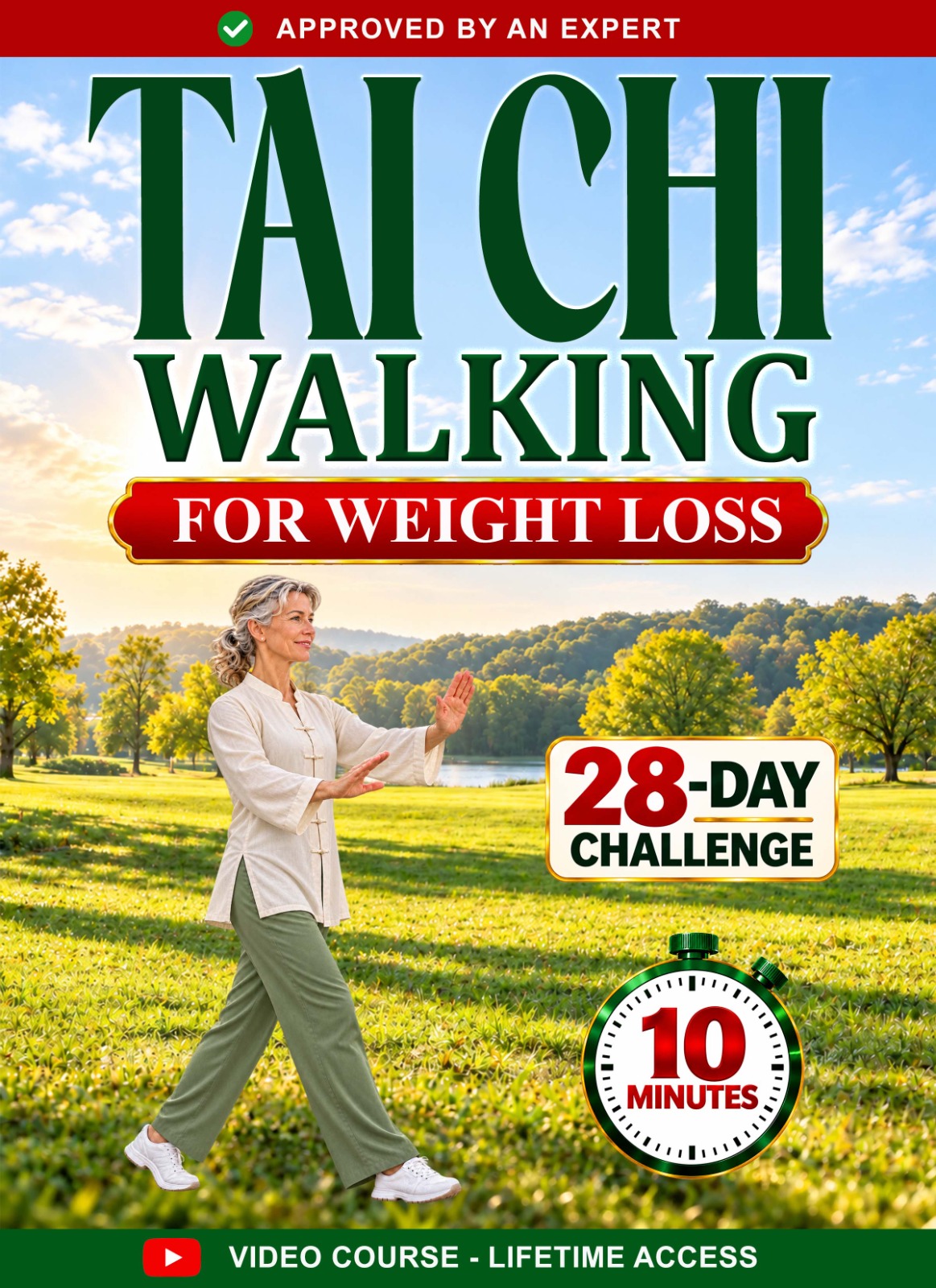
Paperback, large print edition
You finally have ten minutes to yourself. You want to move, but you are unsure which exercises to do or how to get the steps right. JingFlow gives you a place to start. Open to today’s practice, follow the pictures and breathing cues, and choose the version you feel ready for.
The plan is built for real days. Some days you will stand at a counter for support. Some days you will sit. Some days three minutes is the right amount, and the plan counts that as a proper session.

Most routines ask you to decide what to do, how long to do it, and whether you are doing it right. This book makes those decisions for you, day by day.
Four weekly practice tables tell you what to do, how much time to set aside, and which easier option to choose if you need it. There is nothing to plan the night before.
The 35 large-print illustrated exercises help you check foot placement, hand position, and how to shift your weight. The walking chart sums up the essentials in a few lines: feet stay on separate tracks, about hip width apart, and you place the foot down empty before gliding your weight forward.

Some movements are easier to copy than to read about. The video demonstrations let you watch the pace of a practice, see how a step begins and ends, and then follow along at the speed that suits you.
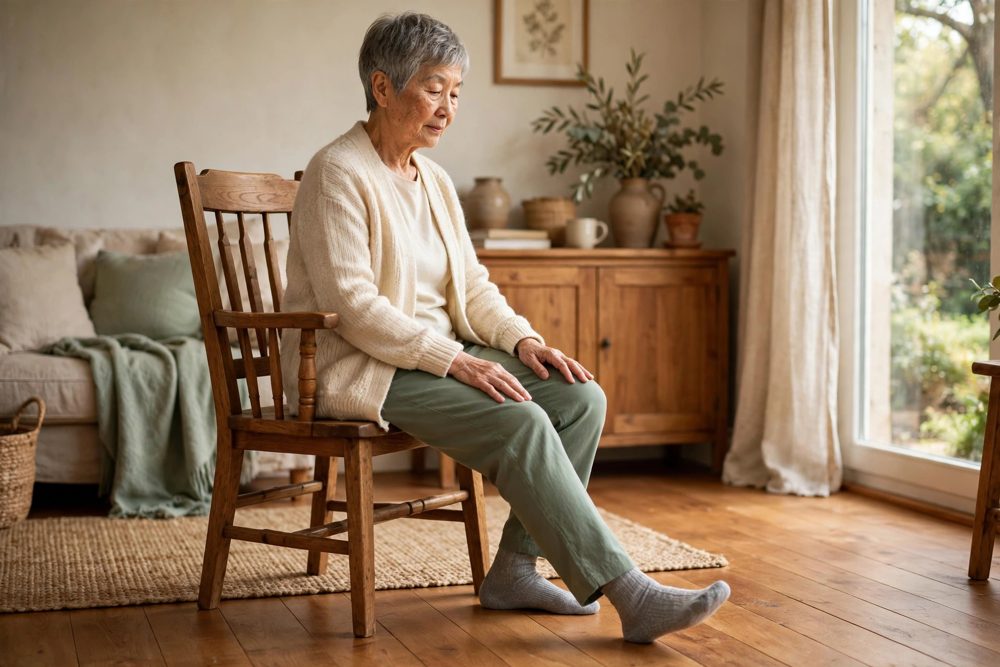
Seated and supported practice is a full starting point, not a lesser one. You can use a stable chair or a fixed counter whenever the book calls for support, and keep using it for as long as it helps.
Every session comes in 3-, 5-, and 10-minute versions, with preparation, pauses, and finishing included. Choose ten minutes on a quiet morning, five on a busy one, and three on a lower-energy day.
The exercises teach you to notice where your weight is before you take the next step. You place the foot down first, then let your weight glide onto it, so each step feels deliberate rather than rushed.
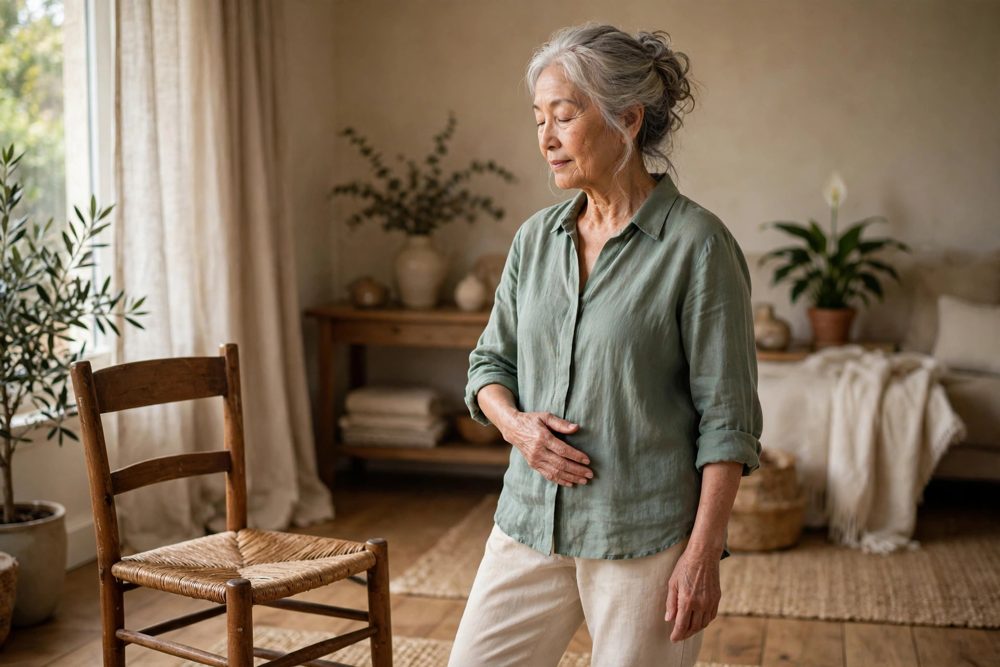
Each session begins with easy breathing, moves into deliberate stepping, and ends with a comfortable finish. The guide for pace is simple: a full spoken sentence should always feel easy while you practice.

The progress journal gives you space to log your practice days, session length, the path you chose, and how the practice felt, along with any measurements you choose to record. Rest days belong on the page too.
Regular, repeatable movement is easier to keep than an ambitious routine you dread. The book pairs the daily practice with straightforward guidance on balanced food habits and realistic expectations.
Shorter options are built into every week, and the guide for life after Day 28 shows you how to choose a manageable session and resume practice after time away, without starting over.
Every session follows the same calm shape, whether it lasts three minutes or ten. Here is the ten-minute version.

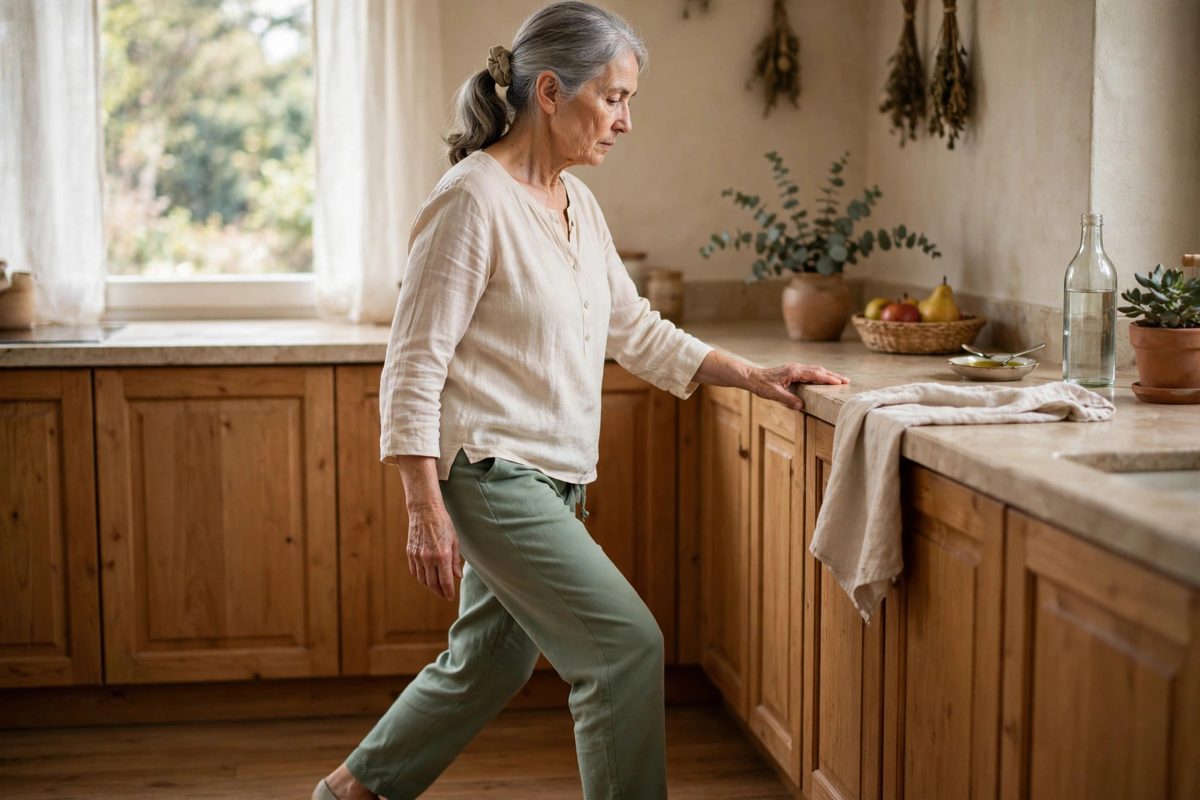
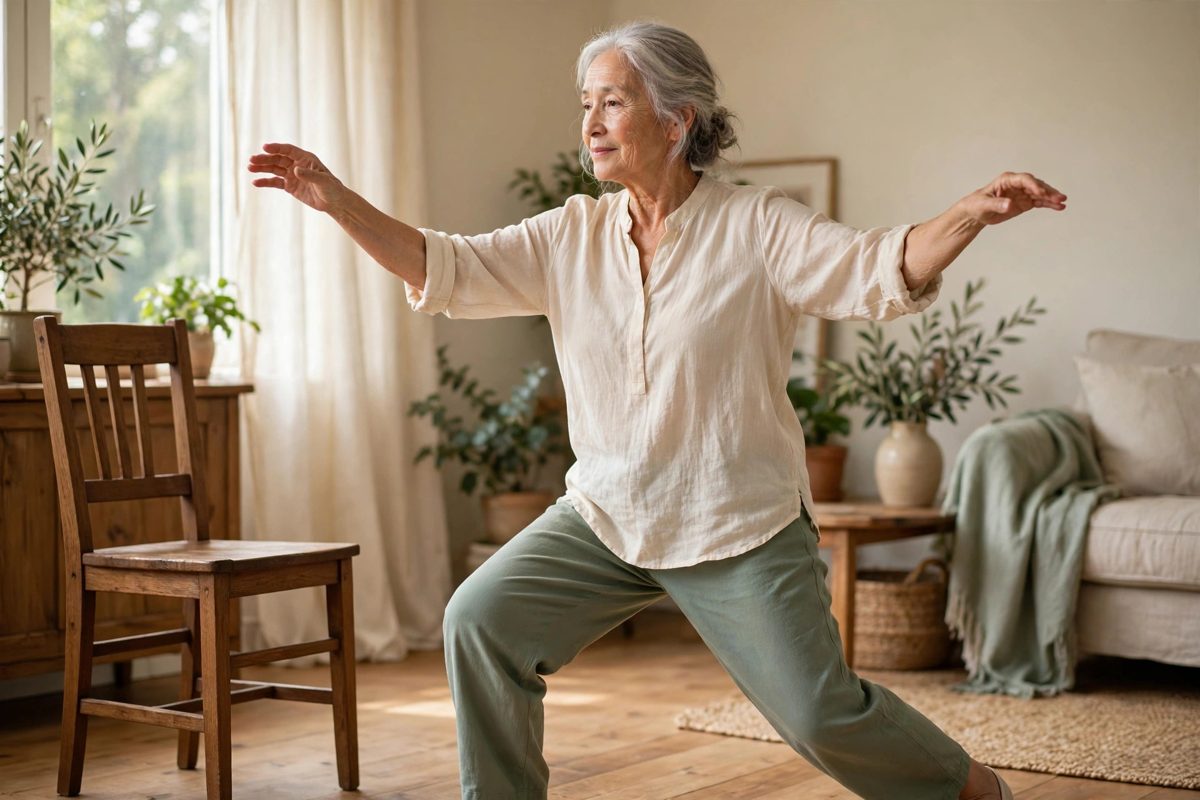
For the first two minutes, breathe naturally and loosen your ankles and shoulders, shifting your weight gently from side to side. There is no pattern to force. You are simply arriving.
For the next six minutes, walk slowly with pauses. Place your foot down empty, on its own track about hip width from the other, then glide your weight onto it. Support stays within arm’s reach.
For the last two minutes, slow down, release, and close with calm breaths. If today calls for less, the three-minute version ends the same way, with a quiet rest in the chair.
For days when you want a chair under you or a counter beside you. Standing steps become gentle heel slides and arm movements, and the practice still counts in full.
For learning individual movements at a comfortable pace. You take a few steps, pause with both feet down, breathe, and continue when you are ready.
For when the movements feel familiar and you want to link them together into a continuous, flowing practice, with pauses whenever you want them.
Rest is one of the four paths, not a failure of the plan. The program treats rest as an active, productive choice, and the schedule builds rest days in every week.
Each week has its own daily schedule. Every day names the practice, and every day offers an easier option. Here is how the four weeks unfold.
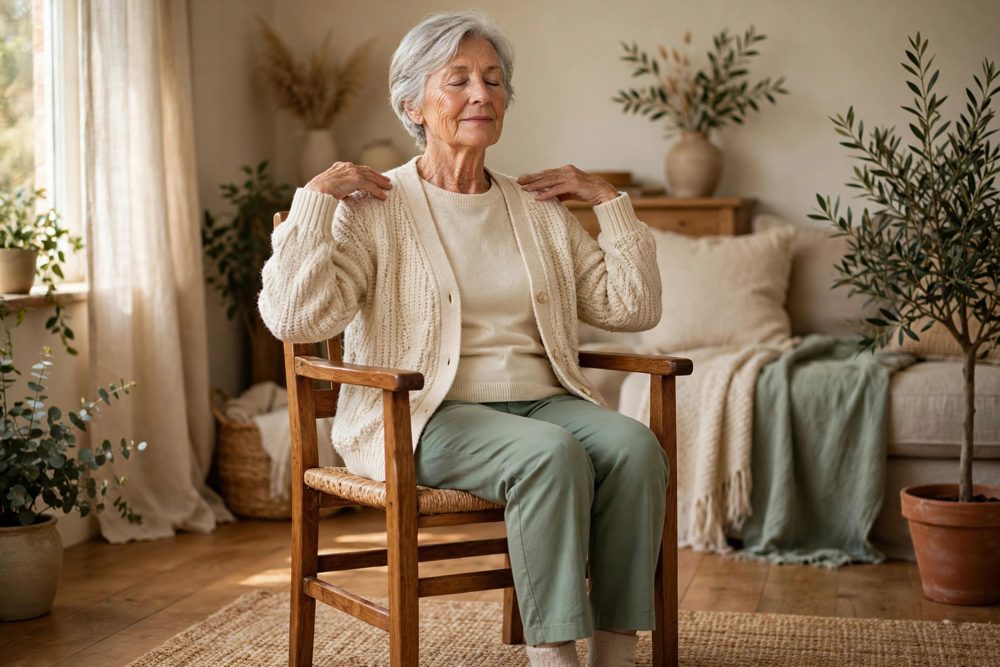 Week 1
You begin seated. The week covers releasing your shoulders, feeling both feet, and placing one heel with support, then joins them into a first short session. For example, on Day 4 you practice supported heel placements, with seated heel slides as the easier option. Day 7 is rest and a short journal reflection.
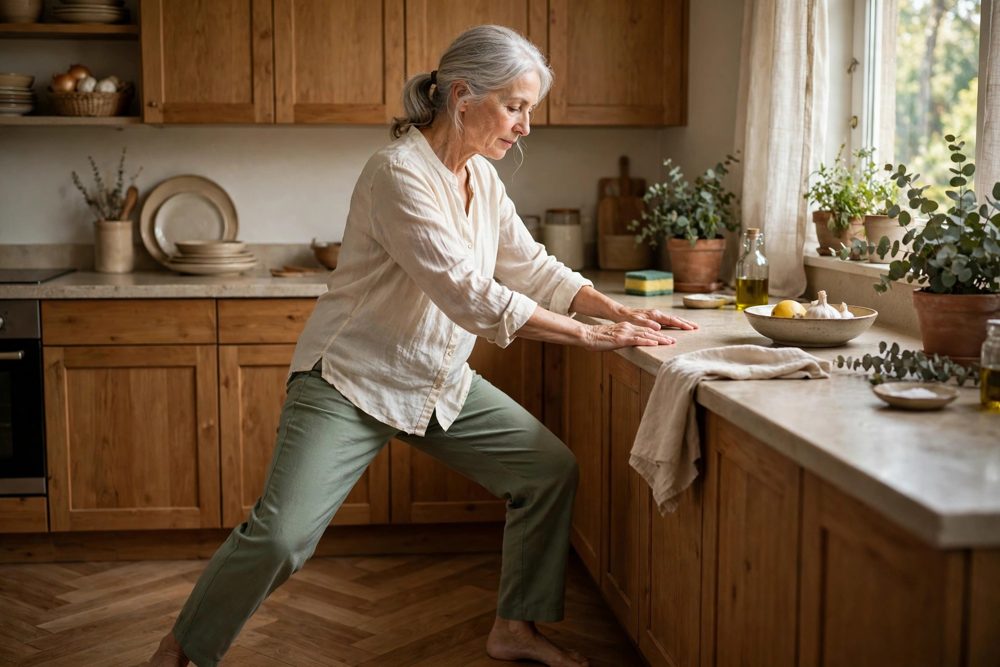 Week 2
The steps you know get small additions: a deliberate pause between steps, a sideways placement beside a counter, and attention to the heel touching down before your weight follows. Later in the week you let an arm follow the step and try one small supported turn. Day 14 is rest and review.
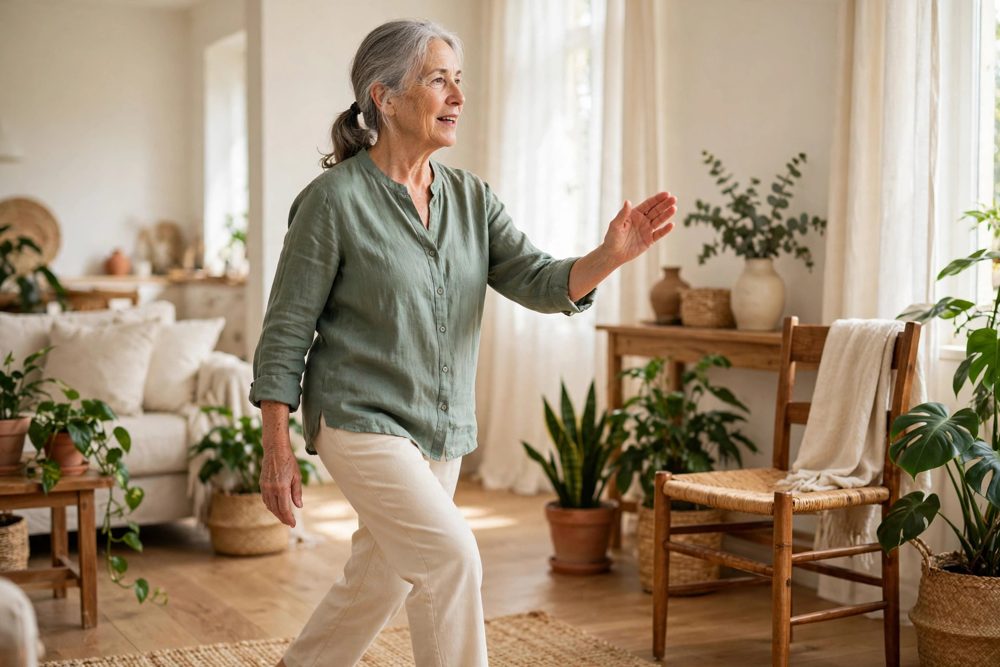 Week 3
Sessions grow gently, up to six minutes of practice in the middle of the ten-minute template: two minutes to prepare, six to practice, two to finish. You mix forward and sideways steps, check your pace by speaking a full sentence aloud, and repeat a session to notice one detail, such as a quiet landing.
 Week 4
The final week is about keeping going in real life. You practice the Three Minute Minimum on purpose, write a simple if-then plan for a likely interruption, and rehearse the session you expect to repeat next month. Day 28 closes with a comfortable familiar session and a reflection.
Your first day is a seated first session. You sit with support, notice your breath without changing it, and let that be enough. The easier option is printed right beside it: remain supported in the chair, and rest if you feel unwell.
That is the pattern for all 28 days. The day’s practice, the time it takes, and the easier version are decided before you begin, so you can simply follow along.
These are real pages from the JingFlow program printables that accompany the book. Select any image to see it larger.
The program also includes video demonstrations, so you can watch a movement at its real pace before you try it. Readers get the demonstrations and downloads with the book, as described in the questions below.
The book comes with five printable companions. Each one answers a moment you will actually meet during the 28 days.
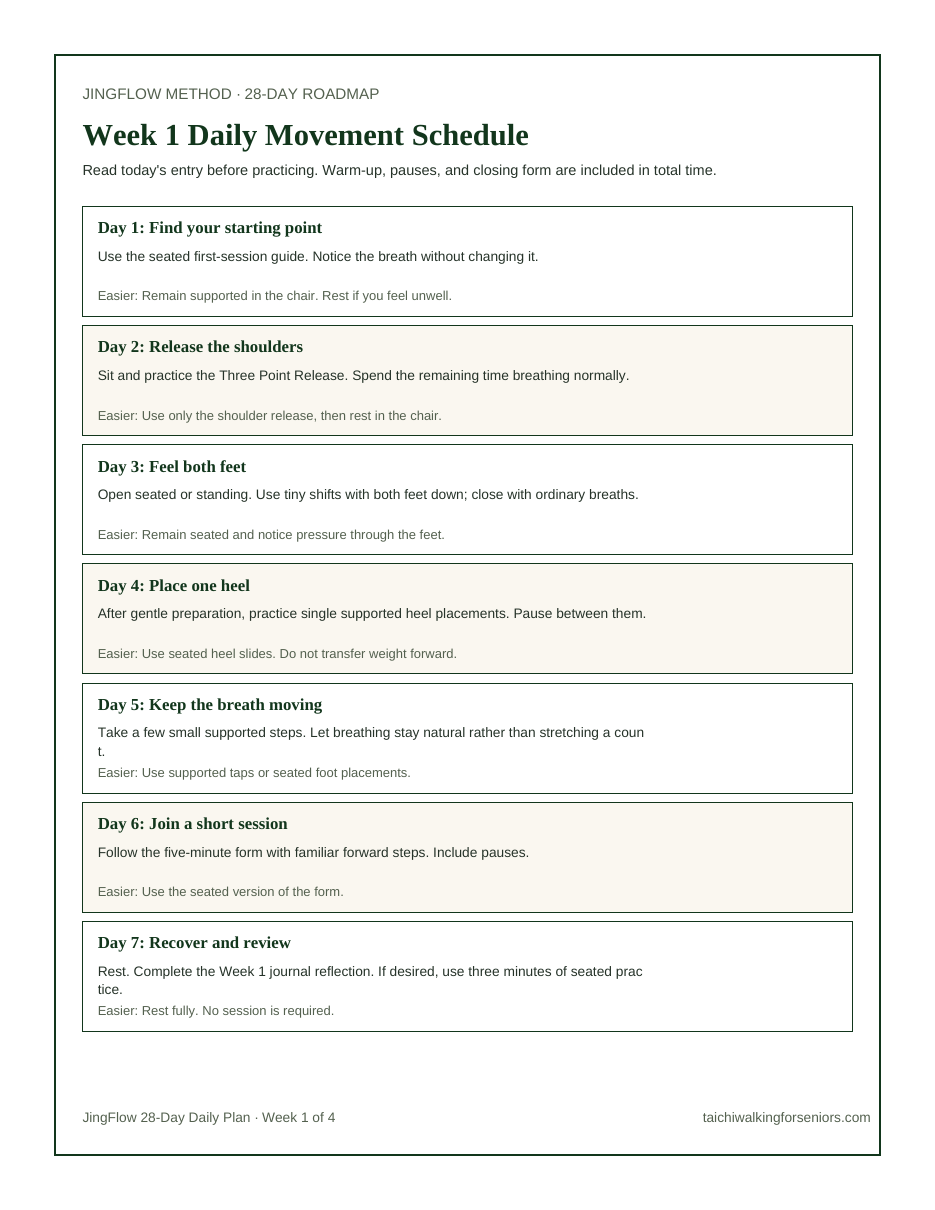
Use it each morning. The quick-start guide and 28-day practice calendar show you which practice comes next, how long to allow, and the easier option for the day.
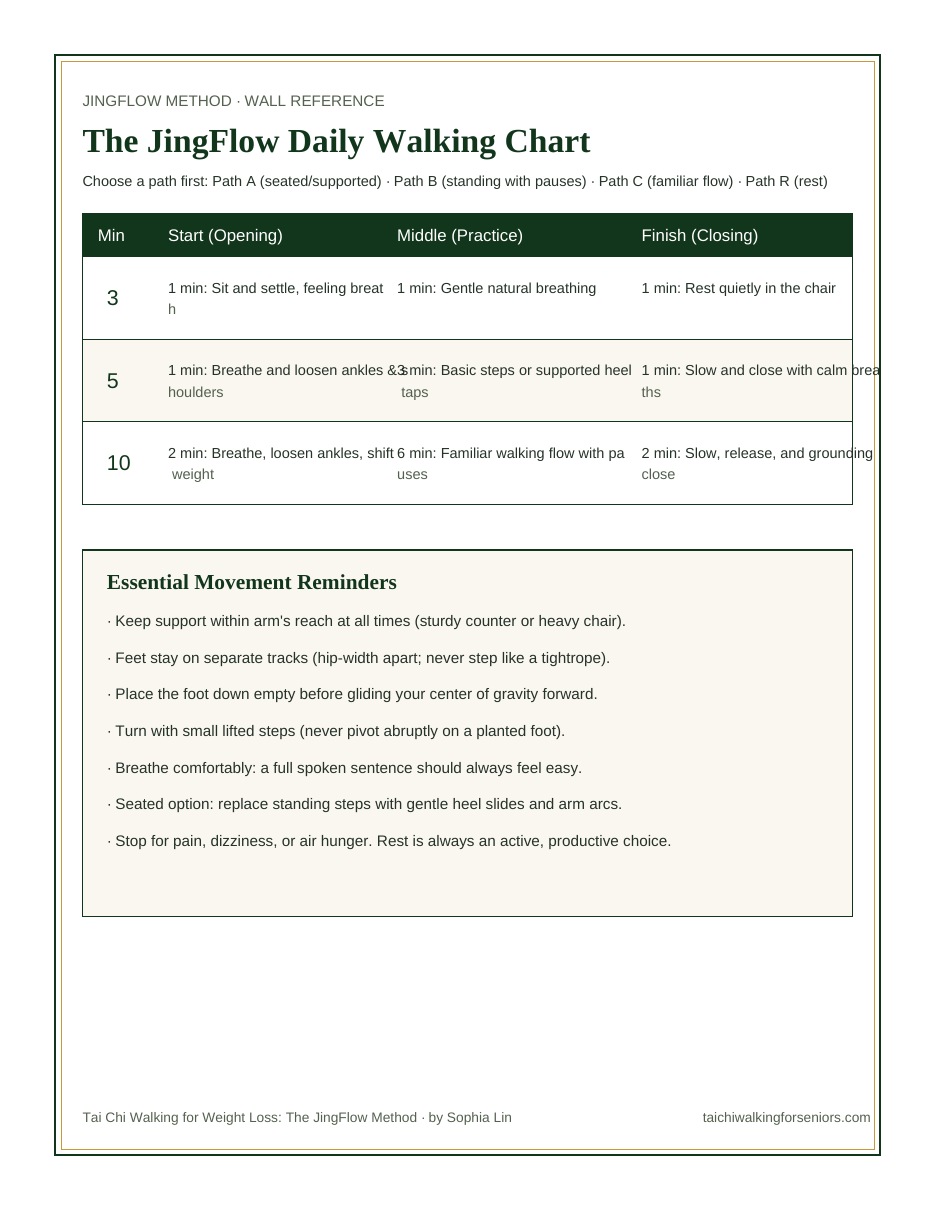
Use it during practice. Print this visual reference and keep it in your practice space, so a glance reminds you of the session order and the movement essentials.
Use it on uncertain days. Pick a session that fits your time and energy today, and see illustrated seated and supported alternatives for the same practice.
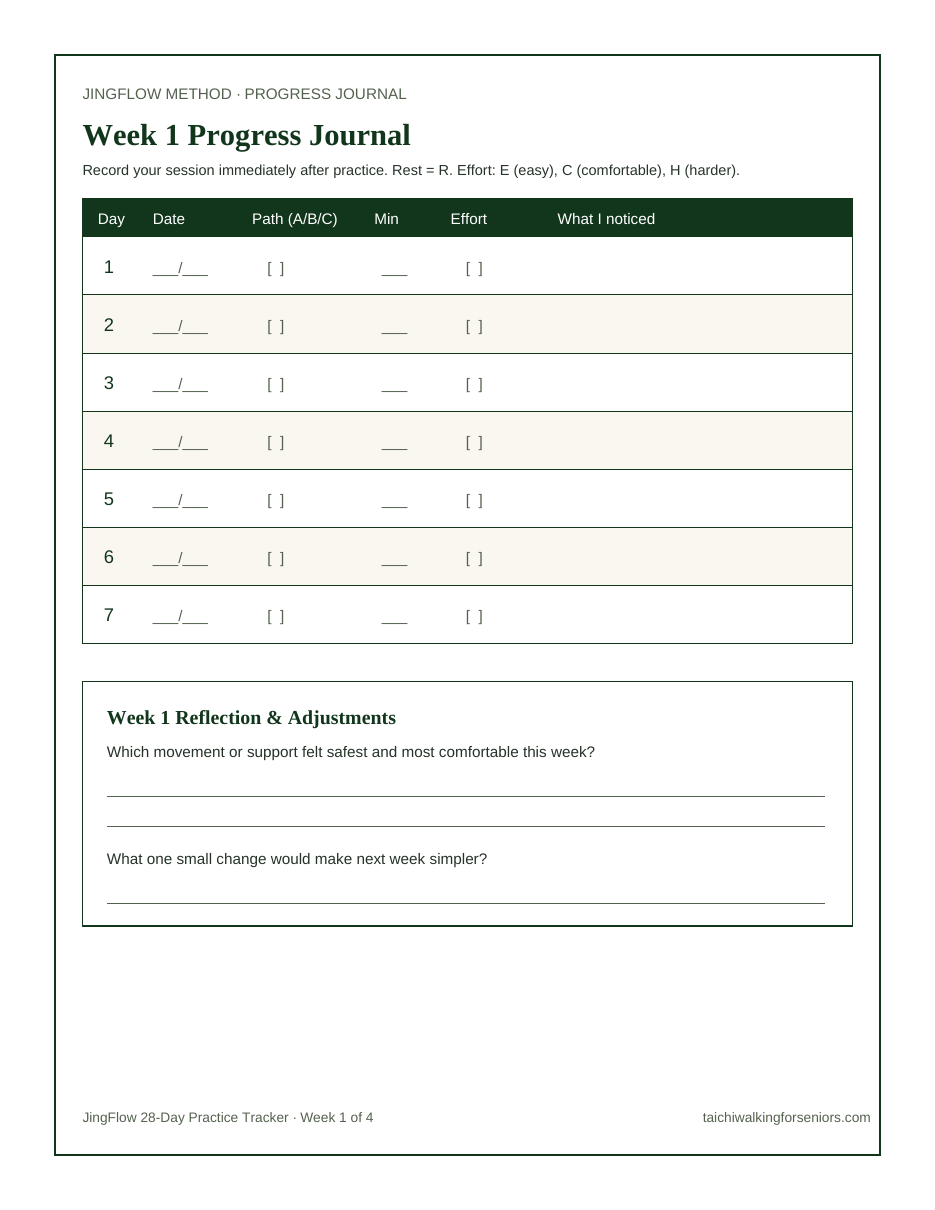
Use it after practice. One hundred pages for daily entries, weekly reflections, and monthly reviews. Record what you practiced and how it felt, alongside any measurements you choose.
Use it when the program ends. Keep a workable routine going, plan shorter days, and find your way back after a break without feeling you must start from scratch.
All five companions are printable downloads that come with the book. If you have any trouble opening them, contact us through the contact page and we will help you get your copies.
Yes. The program was written for older beginners, and it assumes no previous Tai Chi experience. You start seated, learn one movement at a time, and repeat it before anything new is added.
Yes. Path A is seated or supported practice, and it counts as a full session. You can use a stable chair or a fixed counter whenever the book calls for support, for as long as it helps.
Three, five, or ten minutes. Every session template includes preparation, pauses, and a finish inside that time, and each day of the plan tells you which option to use, with an easier one beside it.
No equipment and no floor exercises. You need a small, clear space and, for supported practice, a sturdy chair or counter within arm’s reach. The book also reminds you to stop for pain, dizziness, or breathlessness, and to rest instead.
Use the Three Minute Minimum: one minute to settle and breathe, one minute of gentle practice, one minute to rest. Rest days are already built into the schedule each week, and if you miss more time, the Beyond Day 28 guide shows you how to resume with a shorter session rather than starting over.
The video demonstrations and the five companions come with the book as part of the program. If anything does not open or download as expected, message us through the contact page and we will help you get access.
Yes. This is the large print edition. The 35 exercises are set in large print with clear instructions and breathing cues, so you can check your place without putting the book down or reaching for reading glasses mid-practice.
Gentle movement can be one part of a wider approach. The book helps you build a regular movement habit you can keep, and it includes straightforward guidance on balanced food habits and realistic expectations. Weight and waist changes also depend on eating habits, sleep, health, and other factors, and the book does not promise specific results.
Day 27 has you rehearse the session you expect to repeat in the following month, and Day 28 closes with a reflection. The Beyond Day 28 companion then helps you maintain a workable routine, plan shorter days, and return after a break.

About the Author
Sophia Lin is the author of Tai Chi Walking for Weight Loss and the creator of the JingFlow Method. Her program was designed for older beginners who want a calm, structured way to move more: short sessions, clear pictures, support whenever it is needed, and a plan that tells you what to do each day.
The JingFlow approach is built on one simple idea. You do not have to master every movement before you begin. Learn one, repeat it, and build from there.
Choose the practice path that feels right today. The book shows you where to begin, what to do next, and how to keep going at your own pace.