What is a book worth to your business?
Authors don't earn from royalties — they earn from what the book does: paid talks, pre-sold clients, premium fees. Enter your numbers for an estimate.
Free 15-minute strategy session · Fixed-price quote before you commit · NDA-backed

What is a book ROI calculator?
A book ROI calculator estimates what a published book could be worth to your business in a year. It adds up the two returns a business book usually produces: paid speaking and new clients. Then it shows the total over three years, because a book keeps working long after launch week.
The maths is simple on purpose. Your speaking fee times the talks the book could bring you, plus new clients times what one client is worth. Four numbers in, one estimate out. The hard part is not the maths. It is choosing honest numbers.
This page gives you the tool and the thinking around it. You will see what each number means, a worked example with the default numbers, and what the calculator leaves out. No outcome is promised. The estimate is yours, from your numbers.
Our ghostwriting ROI guide walks through the same maths in more depth, and our book lifetime ROI guide looks at what a book returns over its whole life. The calculator below is the fast version: your numbers, your estimate, in under a minute.
The formula at a glance
Yearly value = (speaking fee × talks per year) + (new clients per year × average client value)
Three-year value = yearly value × 3
The calculator estimates gross yearly value. It does not subtract the cost of the book. Costs are mapped on a free strategy session, with a fixed-price quote before you commit.

Run your numbers
Enter your numbers below. The estimate updates as you type, and the three-year figure shows what the same yearly value adds up to over three years of authority working for you.
Start with the default numbers if you are unsure. They are placeholders, not averages. The worked example below shows exactly what they add up to.
Estimates based on your inputs — not a guarantee of results.

Your numbers stay in your browser. Nothing is sent to us, and nothing is stored. Change any number and the estimate updates at once, so you can test a cautious version and an optimistic version side by side.
What does each number mean?
Each input is one judgement about your business. Here is how to make each one honestly, and what happens when you get one wrong.
Input 1 · What it changes
Your speaking fee per talk
Start with the fee you charge for one paid talk today. If you do not speak yet, use the fee you would need for a talk to be worth your time.
Your fee reflects what organisers will pay for a credentialed guest. A published book is the credential they check first.
Input 2 · What it changes
Paid talks per year
Count the extra paid talks the book could bring you in a year. Start small. One or two extra talks a year is a serious result for a first book.
Overstate this number and the estimate flatters you. Understate it and you hide the book's best return. Use the talks you could plausibly say yes to.
Input 3 · What it changes
New clients per year
These are the clients who find you, trust you faster, and sign because the book did the explaining first. Look at how many clients you win in a year now, and ask how many more a credible book could add.
Even one extra client a year can carry the whole project, when that client is worth what your clients are worth.
Input 4 · What it changes
Average client value
Use what one client is worth to you, usually over the first year of working together. Use your real average fee, not your biggest engagement. A conservative number keeps the estimate honest.
This is the number most people get wrong, because it feels small. It is also the number that moves the total most.

Free 15-minute session · Your numbers, mapped to a book plan
What do the default numbers add up to?
The calculator opens with four placeholder numbers. They are not averages and not a promise. They are there so you can see the maths work. Here is what they add up to.
The default numbers, worked through
| Return | The maths | Yearly value |
|---|---|---|
| Speaking | $5,000 fee × 4 talks | $20,000 |
| New clients | 6 clients × $10,000 average value | $60,000 |
| Yearly value | $20,000 + $60,000 | $80,000 |
| Three-year value | $80,000 × 3 | $240,000 |
Two things stand out. First, the clients do most of the work: $60,000 of the $80,000 comes from six new clients. That is normal for a business book. Speaking pays well per talk, but clients compound.
Second, the three-year figure is three times the yearly figure, because the calculator assumes the same yearly value repeats. In real life it varies. Some years bring more talks, some bring fewer. Treat the three-year figure as a simple multiple, not a forecast.
Now replace the placeholders with your numbers. If your client value is $15,000 instead of $10,000, six clients are worth $90,000 a year. If your fee is $2,500 and you give two talks, speaking adds $5,000. The calculator does the arithmetic. You supply the judgement.

What does the calculator leave out?
Four things, and they matter. First, costs. The calculator estimates gross value, not profit. Writing, editing, cover design, formatting, publishing, and launch all cost money or time. Our ghostwriting pricing guide explains what each part of a book costs, and a strategy session maps those costs to your book with a fixed-price quote.
Second, royalties. They are real, and they are usually the smallest line. A $9.99 ebook at the 70% KDP royalty rate earns about $7 per sale before Amazon's delivery fee.
A 300-page black-ink paperback at $9.99 earns $1.39 a copy after printing costs, under the KDP paperback royalty rules. Royalties add up over time, but they rarely carry the return on their own.
Third, the returns that are hard to count in advance. Higher fees for the same work. Workshops and courses built from the book. Referrals that start when someone hands your book to a colleague. Media invitations that arrive because you are now the author on the topic.
They are real, and they belong in your thinking, even though this calculator does not count them.
Fourth, time. A book takes 4 to 6 months with the studio, and the returns arrive over years, not weeks. Anyone who promises fast payback from a book is selling something else.
For a second view on the same question, the Writing King ROI guide and the Authors Unite ROI framework both walk through the full calculation, including the costs this page leaves to the strategy session.

What the calculator counts
- Paid speaking the book could bring
- New clients the book could bring
- One year, and three years of the same
What it does not count
- The cost of writing and publishing
- Royalties from book sales
- Higher fees, workshops, and referrals
From your numbers to a book plan
The calculator gives you an estimate. A strategy session turns it into a plan. Here is how that runs.
1
A 15-minute strategy session
Bring your numbers. We map them to a concrete book plan and a clear fixed-price quote. The session is free, there is no obligation, and the conversation is NDA-backed.
2
A free sample chapter
Before you pay anything, you read a sample chapter written in your voice. That is the point of the sample: you judge the voice before you commit. The studio's Voice-Match Guarantee stands behind it.
3
Writing, editing, design, publishing
The studio writes with you in interviews, then edits, designs, and publishes the book. The full-book timeline runs 4 to 6 months, and the studio takes at most 3 new full-book projects a month. See how the process runs and what ghostwriting covers.
4
Launch and the long game
The book goes to work: talks, clients, media, and referrals. Our book marketing services and book marketing strategy cover the launch and the years after it. A book is a slow asset, not a launch-week spike.


Free 15-minute session · Fixed-price quote · NDA-backed
What authors say about the work
The calculator gives you numbers. An author who has been through the process gives you the other half: what the book changed. Amanda Chen put it this way:
“Fahad didn't just write my book; he elevated my entire business methodology. The interview process forced me to clarify concepts I had been teaching for years. The final manuscript was brilliant. It is the best marketing asset I have ever created.”
Amanda Chen — author
That is the return this calculator is trying to measure: not the royalties, but the business the book builds. A book that clarifies your method becomes the asset that sells it.
Read more from authors on the testimonials page, or see the finished books on the portfolio page.

Ghostwriting and Amazon KDP publishing for founders and experts. 300+ books, 7+ years.
Books published by the studio
Every cover below was designed, edited, and published by Hafiz Publications.
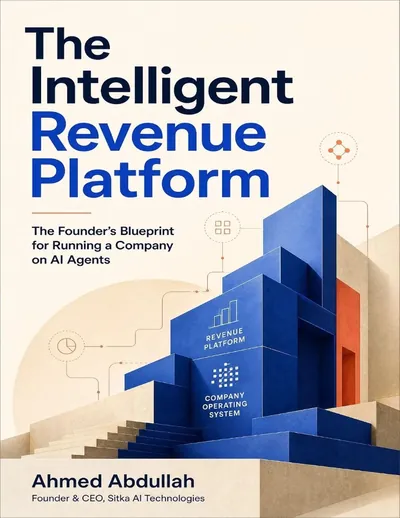




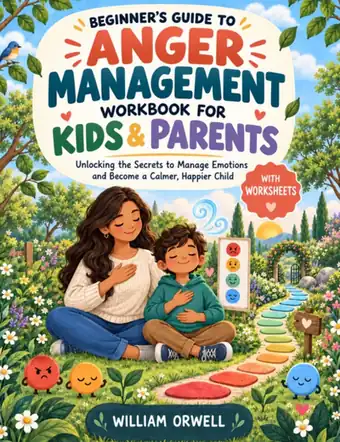

See the full list on the portfolio page.
Key takeaways
- A book ROI calculator adds two returns: paid speaking and new clients, over one year and over three years.
- The four inputs are your speaking fee, talks per year, new clients per year, and average client value.
- In the default example, six clients at $10,000 each produce $60,000 of the $80,000 yearly value.
- Royalties are real but small: about $7 on a $9.99 ebook and $1.39 on a 300-page $9.99 paperback.
- The calculator estimates gross value, not profit. Costs are mapped on a free 15-minute strategy session, with a fixed-price quote.
Frequently asked questions
It estimates the gross yearly value a published book could bring your business, from two returns: paid speaking and new clients. It does not subtract the cost of the book, so it is a value estimate, not a profit figure. The three-year figure is the same yearly value multiplied by three.
Royalties are real, and they are usually the smallest line. A $9.99 ebook at the 70% KDP rate earns about $7 per sale before Amazon's delivery fee. A 300-page paperback at $9.99 earns $1.39 a copy after printing costs. Royalties add up over time, but they rarely carry the return alone.
Start with the fee you charge for one paid talk today. If you do not speak yet, use the fee you would need for a talk to be worth your time. Your fee reflects what organisers will pay for a credentialed guest, and a published book is the credential they check first.
Use numbers from your own business, and start small. Count the talks you could plausibly say yes to in a year, not the ones you dream about. For clients, look at how many you win in a year now and ask how many more a book could add. Run the calculator twice: once cautious, once optimistic.
No. It estimates gross value only. Writing, editing, cover design, formatting, publishing, and launch all cost money or time, and those costs belong on the other side of the calculation. A free 15-minute strategy session maps them to your book and gives you a fixed-price quote before you commit to anything.
You bring your numbers and your book idea. We map them to a concrete book plan and a clear fixed-price quote in 15 minutes. There is no obligation, the session is free, and the conversation is NDA-backed.
Now let's make it real.
A 15-minute strategy session maps your numbers to a concrete book plan — and a clear fixed-price quote.
Book Your Strategy Call