Book Proofreading Services for Nonfiction and Memoir Authors
Your book is edited, formatted, and ready to publish. One job remains: a final, fresh-eyes pass over the pages your readers will actually see — catching the typos, punctuation slips, and layout errors that survived every earlier round.
Starts with a free manuscript assessment · Fixed-price quote before you commit · NDA-backed
The short answer: what our book proofreading services include
Our book proofreading services are that last check, done on the formatted print and ebook proofs, for authors who intend to publish.
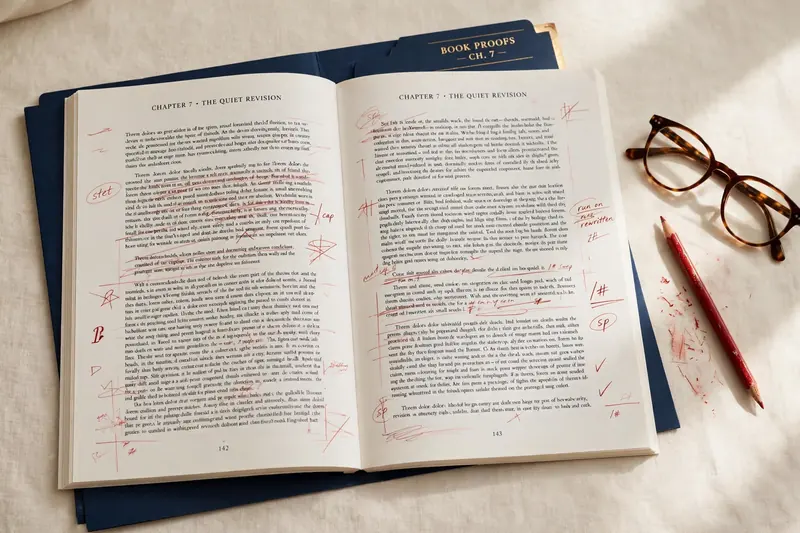
Book proofreading services at Hafiz Publications mean one thing, done properly: a professional proofreader reads your formatted book — the print proof and the ebook proof, as separate files — and catches what every earlier round missed. Leftover typos and punctuation slips. A page number in the table of contents that points to the wrong page. A running head carrying the previous chapter's title. A caption that no longer matches its image after the layout shifted. A widow line stranded alone at the top of a page. These are small errors, and they are the errors readers notice first, because a typo in a finished book reads as carelessness, and carelessness makes a reader doubt everything else the book claims.
This page is the commercial companion to our 47-point proofreading checklist, which shows exactly what a professional proofread checks. The checklist is the do-it-yourself version; this page is where you hire the pass done for you, by someone who has never read your words before. If you are still deciding whether your book needs editing, proofreading, or both, read our guide to editing and proofreading first. If your book is formatted and ready for its final pass, book a strategy session and we will assess the files.
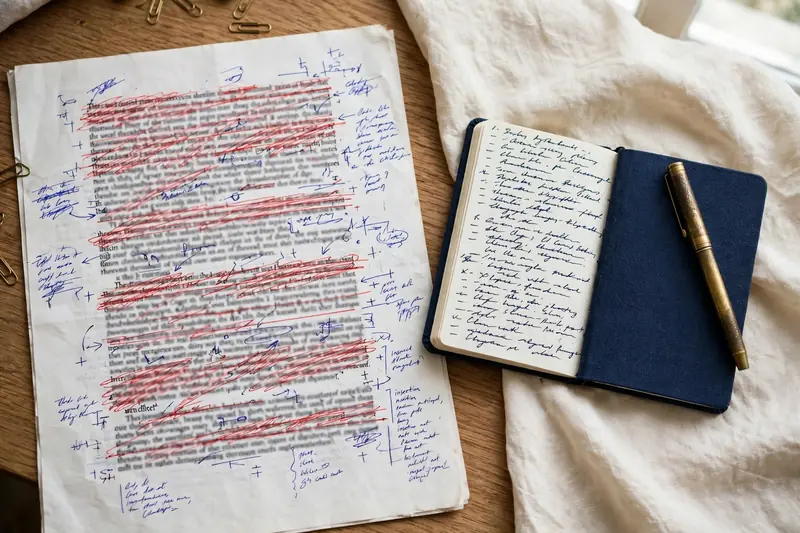
Proofreading is the last editorial step in our publishing pipeline, and it sits in the same studio that edited, formatted, and will publish the book — which matters, because the proofread is where the earlier stages get their final verification. Every engagement starts with a free manuscript assessment that tells you honestly whether your book is ready for proofreading or still needs an earlier level first. We will tell you if you are asking for the proofread too early, and we will tell you what to do instead.
What proofreading catches that editing does not
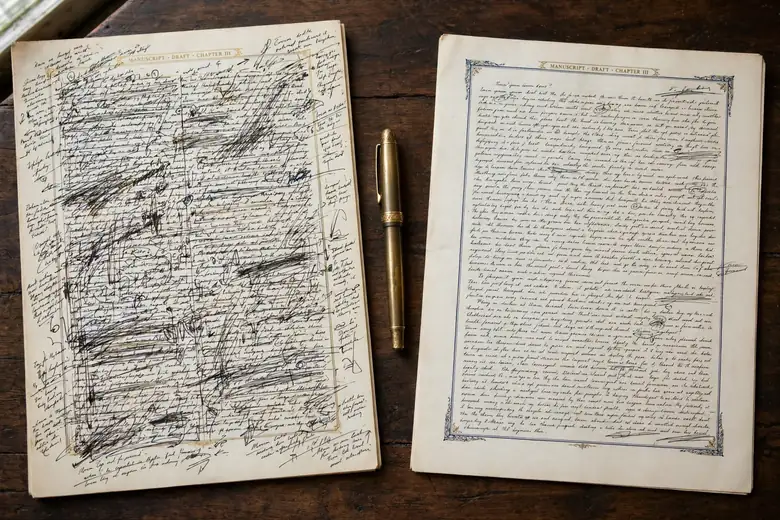
The most common misunderstanding about proofreading is that it is a lighter version of editing — the same job, done more cheaply. It is a different job, and the difference is where the errors live. Editing works on the manuscript. Proofreading works on the formatted pages. And the step between them, formatting, creates a whole family of errors that no editor has ever seen, because they did not exist when the edit happened.
When a manuscript becomes a book, the text is poured into pages. Chapters break in new places. A table that fit on one page now splits across two. A figure moves and its caption does not follow. The table of contents is generated from the new pagination, and one wrong entry means a reader who looks up chapter nine lands on chapter eight. Running heads are set per chapter, and a single wrong one tells the reader they are somewhere they are not. None of these errors existed in the manuscript. A copy editor, however good, cannot catch them, because they had nothing to catch yet.
Then there are the errors the earlier rounds created themselves. Every edit introduces the chance of a new mistake: a corrected sentence that lost a word, a paragraph that was moved and left a doubled word behind, a find-and-replace that changed a term in one chapter and missed it in another. Proofreading is the only pass that reads the book after all the changes are in. It is the safety net at the bottom of the editorial process, and it only works because it comes last.
Errors only the proofread can see
| Error | Where it hides | Why editing missed it |
|---|---|---|
| Wrong TOC page numbers | Front matter, after layout | Page numbers only exist once the book is laid out |
| Widows and orphans | Page tops and bottoms | Single stranded lines are a layout artefact |
| Wrong running heads | Top of every page | Running heads are set during formatting |
| Caption drift | Figures and tables | Images move in layout; captions do not always follow |
| Broken cross-references | "See Chapter 4" notes | Chapter numbers shift when chapters move |
| Errors from fixes | Any corrected passage | A fix applied after the edit was never re-read |
Three honest rules follow from that table.
First, proofreading a manuscript that has never been edited is a waste of money: it will return a clean file of a book that still needs editing.
Second, skipping the proofread after formatting is the most expensive saving in publishing: the errors it catches are the ones your readers will find, one-star at a time.
Third, the proofread must happen after the last change, not before it — rewriting a chapter after the proofread sends the errors back in.
Free manuscript assessment first — we tell you honestly whether your book is ready for proofreading.
Proofreading vs copy editing: which one does your book need?
Proofreading and copy editing are the two levels authors confuse most, because both catch small errors and both work at the level of words and punctuation. They are different jobs, done at different times, on different documents, and hiring the wrong one is the most common way authors waste money at the end of the publishing process.
Copy editing happens on the manuscript, before layout. A copy editor corrects grammar and punctuation, fixes spelling, enforces consistency — the same term spelled the same way every time, numbers and capitalisation handled the same way throughout, names and dates checked against each other — and applies a style guide so the book reads like one book instead of twelve chapters written on different days. Copy editing can still reword a sentence to make it correct. It works on the text, and it changes the text.
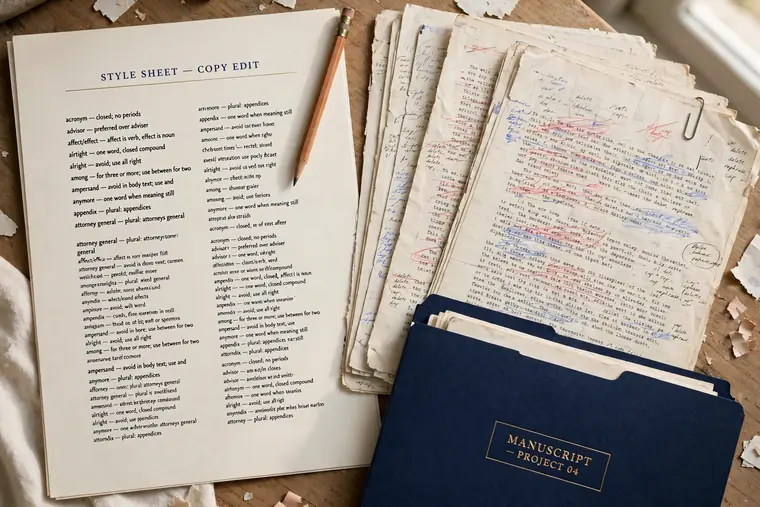
Proofreading happens on the formatted pages, after layout. A proofreader corrects the errors that survived copy editing and the errors that formatting created: the typo on page 87, the punctuation slip in a heading, the page number that does not match the table of contents, the widow line left alone at the top of a page. A proofreader does not reword sentences. The only changes a proofreader makes are fixes to outright errors — and every fix is logged, so you can see exactly what changed and why. Our line editing vs copy editing guide works through the earlier levels in depth; this page is about the last one.
Here is the practical way to choose. If your book is still a manuscript — a document file, not yet laid out as pages — you need copy editing, not proofreading. If your book is already formatted, with page numbers, running heads, and a table of contents, you need proofreading. If it has never had either, it needs copy editing first, because proofreading a manuscript full of uncorrected errors wastes the proofread: the proofreader will spend the pass on problems the copy editor should have caught, and the layout errors will still be there afterward. Our guide to editing and proofreading maps the full sequence, and our book editing services page covers the earlier levels when your book needs them too.
Copy editing
Before layout, on the manuscript
Grammar, punctuation, spelling, and consistency — and it can still reword a sentence to make it correct.
Proofreading
After layout, on the formatted pages
Leftover typos, punctuation slips, and layout errors. It never rewrites — it fixes outright errors only, and every fix is logged.
The practical way to choose
Still a manuscript? You need copy editing. Already formatted? You need proofreading. Never had either? Copy editing first.
Two proofreads, not one: the manuscript proofread and the proof proofread
A book needs two different proofreads at two different moments, and confusing them is how errors survive to publication. The first is the manuscript proofread: a final read of the edited text before it goes to the formatter, catching the last typos and consistency slips while the text is still easy to fix. The second is the proof proofread: a read of the typeset pages — the PDF or ebook file that represents what the reader will actually see — catching the errors the layout introduced. They serve different purposes, they happen weeks apart, and a book that gets only one of them is half-checked.
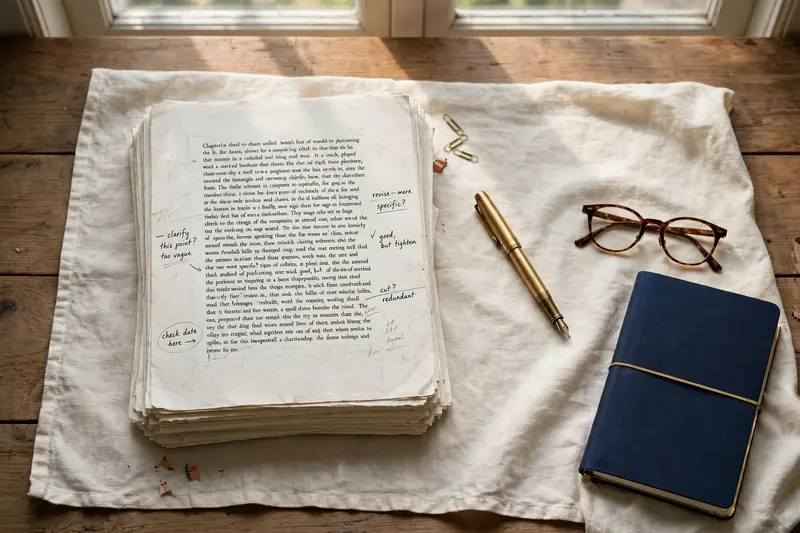
The manuscript proofread matters most because it protects the formatter. A clean manuscript means the formatter works with settled text, and settled text means fewer corrections after layout — and every correction after layout is a chance to introduce a new error. This is the pass where doubled words, missing words, wrong real words like "form" for "from", and homophones like principle and principal get caught. Spellcheck misses all of these, because they are real words used wrongly. A fresh reader does not.
The proof proofread is the one that protects the reader, and it is the one authors most often skip. It reads the book as a printed object: does every chapter start where it should, do the running heads match the chapter, do the page numbers in the table of contents match the actual pages, do the tables and figures sit near their first mention with the right captions, is anything lost into the gutter or crowded against the edge. For most self-published authors, the manuscript proofread is the more important stage, because it gives the formatter clean text — but the proof proofread is the one that catches what your readers would actually see.
The two passes at a glance
| Pass | When | What it catches |
|---|---|---|
| Manuscript proofread | After editing, before formatting | Last typos, doubled and missing words, homophones, consistency slips in the text itself |
| Proof proofread | After formatting, on the typeset pages | Widows, running heads, TOC page numbers, caption drift, broken cross-references, layout errors |
One warning applies to both passes: never accept a "fixed everything" without verifying it against a correction log. Every fix gets one row — proof version, page, location, original wording, requested correction, status — and when the revised proof comes back, each entry is marked completed, queried, or outstanding, and the surrounding paragraph is re-read, because a one-word fix can shift line endings and pagination. That log is part of what you receive.
What a professional proofread checks: 47 things in eight groups
Professionals do not read the book; they interrogate it. Our proofread runs the same 47-point framework published in our proofreading checklist, organised into eight groups, each run as its own focused pass — because the brain cannot hunt for spelling errors, widows, and running-head mistakes simultaneously. One focused read per group: each pass is fast because you are hunting one thing, and each catches errors the others missed. Here is what each group covers.
Spelling and word-level errors
Typos, homophones, doubled words, missing words, wrong real words, capitalisation, hyphenation, and number style — identical throughout the book.
Punctuation and style consistency
Apostrophes, the serial comma, straight versus curly quotes, ellipses, hyphens and dashes doing their correct jobs, consistent bullet punctuation, and matched pairs of brackets, parentheses, and quotes.
Grammar and syntax
Subject-verb agreement, pronoun agreement, dangling modifiers, tense consistency, and accidental fragments and run-ons — intentional fragments for style are left alone.
Consistency and continuity
Name spellings, one term per concept, heading capitalisation, list formatting, abbreviations spelled out on first use, and a style sheet recording every decision so it can be verified in the final pages.
Cross-references and navigation
Chapter titles identical across the table of contents, chapter openers, and running heads; table-of-contents page numbers matching the actual pages; every "see Chapter 4" pointing somewhere real; footnote and endnote numbers with no gaps or duplicates.
Front matter and back matter
A complete copyright page, dedication and acknowledgments with every name spelled correctly, correct running heads, page numbers present and correctly positioned, and back matter in order — about the author, also-by list, and reader-magnet call to action.
Layout and design elements
Widows and orphans, bad page breaks, tables and figures numbered sequentially and placed near their first mention, captions that describe what is actually in the image, and no accidental font changes or leftover track-changes formatting.
Final verification
Every correction from the previous pass is in the file, changed paragraphs are re-read in full, the correction log is complete, chapter boundaries get a fresh read — errors cluster where attention lapses — and the file itself is verified: the correct final version, all sections complete, working links in the ebook.
Two passes, plus verification
Traditional publishers run three proofreading passes on page proofs. Self-published authors should plan at least two full passes on the final formatted files, plus a verification pass after corrections are applied.
Traditional publishers run three proofreading passes on page proofs: corrections go to the typesetter, then second-pass proofs are checked against the first, and the third pass against the second. Self-published authors should plan at least two full passes on the final formatted files, plus a verification pass after corrections are applied. The first pass finds errors; the second verifies the fixes did not introduce new ones. That is the standard our process follows.
KDP and print proof checks: the errors that only exist on paper
For a printed book, the proofread has a second job beyond the text: checking the physical object the reader will hold. Amazon KDP is a print-on-demand service — it manufactures a paperback or hardcover copy each time a customer orders one — and the files you upload are exactly what gets printed. KDP's automated checks will flag a file that is the wrong size or has missing fonts, but they will not catch a cover that looks dark in print, a margin that turns out tight, or a typo on page 87. That is what the print proofread is for.
The print proof is checked against the same things KDP's own help pages warn about. A KDP proof copy — a printed test copy of your unpublished book, marked "Not for Resale" — can only be ordered after the book is approved in KDP's Print Previewer, and it is worth ordering, because a proof shows you paper, ink, trim, and binding, where a cover that looked fine on a monitor can turn out dark and a margin can turn out tight. The proofread covers the outside first: title and author name matching your book details exactly on the front cover and the spine, spine text centred and readable, nothing important sitting near the edges — KDP asks for cover text at least 0.125 inch inside the trim, and allows 0.125 inch of shift and trim variance — and the barcode area clean, with no text or art running into it.

Then the inside: margins and gutter, with no text disappearing into the binding or crowding the outside edge; front matter in order, title page, copyright page, and table of contents with the right page numbers; every chapter starting where you meant it to, with headers and page numbers on the right pages; images sharp, at 300 DPI at their placed size, and nothing that should run to the edge stopping short. The interior must be a print-ready PDF with embedded fonts and mirrored margins — KDP's minimum outside margin is 0.25 inches, and the gutter minimum grows with the page count — and the page count must land between 24 and 828 pages for a paperback. These are mechanical requirements, and the proofread verifies the book meets them before a single customer copy is printed. Our Amazon KDP publishing service handles the upload and the review process from the same studio, so the proofread and the publish step are never two strangers passing files.
Ebook proof checks: what breaks when a book reflows
The ebook proof is a different document from the print proof, and fixing one does not fix the other. An ebook reflows: the text rearranges itself to fit whatever screen the reader holds, which means page numbers, running heads, and fixed layouts simply do not exist in the ebook — and the errors that do exist are the ones that only appear when the text moves.
The ebook proofread checks every link in the book, because a dead link in an ebook is a broken promise: links in the table of contents, links between chapters, links out to the author's website, and links in the back matter all have to land where they claim to. It checks table-of-contents navigation, so a reader who taps a chapter title arrives at that chapter. It checks that images sit where they belong and scale cleanly at different screen sizes, that headings and lists survive the reflow without breaking, and that no formatting from the print file — stray bold, leftover track-changes formatting, a font that only existed on one machine — has leaked into the ebook file.
It also checks the book the way a Kindle reader will meet it: the opening pages, the sample a shopper reads before buying, and the back matter that turns a finished reader into the next book's buyer. A typo in the sample costs more than a typo on page 200, because the sample is where the buying decision happens. Both proofs get the same correction log, and both get a verification pass after the fixes are applied — because a fix to the print file and a fix to the ebook file are two separate changes, and neither is done until it has been checked in its own file.
When you need both editing and proofreading — and when proofreading alone is enough
Most books need both, and the order is fixed: editing first, proofreading last. If your manuscript has never been through a real edit — no developmental pass on structure, no line or copy edit on the sentences — then proofreading alone will not save it. A proofreader will return a clean file of a book whose chapters do not hold together, and no reader will praise the commas. That is the single most expensive mistake authors make at this stage: buying the cheapest, last step and skipping the steps that do the real work.
Proofreading alone is enough in exactly two situations.
The first is when the book has already been properly edited — by us or by anyone competent — and formatted since, so the only remaining job is the final pass over the new pages.
The second is when the book has been through the full process before and only needs a re-proof: a second edition, a corrected reprint, a new format of a book that was already proofread in its first life.
In both cases the proofread is the right purchase, because the earlier work is already done and verified.
If you are unsure which situation you are in, that is what the free manuscript assessment is for. We read the draft, tell you honestly which level it needs, and quote that level — not all four. If the book needs less work than you expected, we say so. If it needs a different level than the one you asked for, we say that too. And if it genuinely needs only the proofread, we will not sell you an edit on top of it. The assessment exists to prevent exactly that kind of waste.
Not sure which situation you are in? The free manuscript assessment answers it.
How does our book proofreading process work?
A proofread goes wrong most often before it starts: the author buys it too early, or the proofreader starts work without agreeing what counts as an error and what does not. Our process is built to prevent both. It has five steps, and the first two cost you nothing.
Assessment
Scope & Quote
Pass One
Author Review
Handoff
Free manuscript assessment
You send the manuscript or the formatted files, and tell us where you think the book stands. We read enough of it to judge honestly whether it is ready for proofreading or still needs an earlier level, and we tell you which. If the book needs editing first, we say so and explain why.
Scope and a fixed-price quote
The assessment becomes a clear scope: manuscript proofread, print proof proofread, ebook proof proofread, or all three — and a fixed price for the agreed work. You receive the quote before committing to anything, and the scope is the scope: no pass is added halfway through without your agreement.
Pass one: the full proofread
The proofreader works through the files in focused passes, one checklist group at a time, with tracked changes and a correction log — one row per fix, recording the proof version, page, location, original wording, requested correction, and status — so you can see every suggestion and why it was made. Nothing is changed silently.
Author review and corrections
You review every correction and accept, reject, or question each one. Corrections go back into the files, and the changed paragraphs are re-read in full, because a one-word fix can shift line endings and pagination. Then comes the verification pass: the revised proof is checked against the log, entry by entry, so no fix is assumed done until it is seen done.
Handoff
The proofread files are returned clean, with the correction log and the style sheet from the edit travelling with them, so the next stage — publishing — starts from a settled, verified book. If the book is continuing into our publishing pipeline, the handoff is internal: the same studio that proofread the book publishes it, and the person who publishes it has the log in front of them.
Two things this process does not include. It does not include rewriting your sentences: proofreading fixes errors, it does not improve your writing, and if a sentence needs improving, that is an editing job we will name, not quietly perform. And it does not include a promise about how long the proofread will take before we have seen the files — a quote and a schedule both follow the assessment, because a 60,000-word manuscript and a 90,000-word formatted proof with tables and figures are different jobs. For a general sense of how editing time varies, our guide on how long editing takes walks through the factors.
Step one is free: send the manuscript, get an honest diagnosis.
Why you cannot proofread your own book
You already know every word in your manuscript — and that is exactly the problem. Cognitive psychologist Tom Stafford of the University of Sheffield explains that writing is a very high level task: to manage it, the brain generalises the simple parts — turning letters into words, words into sentences — so it can focus on combining sentences into ideas. When you re-read your own writing, the shortcut runs in reverse: your brain takes in the text, combines it with what it expects to see, and extracts the meaning. As Stafford puts it, what we see on the screen is competing with the version that exists in our heads — and the version in our heads usually wins. That is why "hte" reads as "the".
A proofreader has no mental map of your book, so typos become glaring instead of invisible. That is the whole value of fresh eyes, and it is not a skill you can substitute with effort: reading your own book a fifth time does not make you a fresh reader, it makes you a more familiar one. The more times you have read a passage, the less you actually see of it.

A founder-led studio: the books are proofread by the same studio that edited, formatted, and will publish them, under one standard.
If you must run a pass yourself first
Break the familiarity before you start. Print the manuscript, change the font, or read sections backward so your brain cannot coast on expectation. Enlarge the text to 150% zoom or read on paper, where small errors become visible. Keep the edited manuscript beside the proof and compare line by line, rather than recalling what should be there. Read backward for spelling: going end-to-start strips words of context and disables the brain's auto-correct habit.
Then run our self-editing checklist before hiring an editor, and hand the final pass to someone who has never read your words. The self-pass catches what it catches; the professional pass is the one that has to catch the rest, because your readers will not forgive the errors your brain forgave.
If you are still deciding between writing the book yourself and working with a ghostwriter, our guide to hiring a ghostwriter lays out the decision honestly, including when a freelancer is the better choice.
Real titles from the portfolio, edited, designed, and published by Hafiz Publications.



A sample of the 300+ books published by the studio. See the full portfolio
What does book proofreading cost?
The honest answer is that it depends, and any page that gives you a single number is either selling one pass or guessing. Three things move the quote: the word count, which proofs the work covers — the manuscript, the formatted print proof, the ebook proof, or all three — and the condition of the files. A manuscript proofread is lighter work than a proof proofread with tables, figures, and front and back matter to verify, and a book that needs two passes costs more than a book that needs one, because the work is different.
The word count
A longer book costs more than a shorter one at the same scope.
Which proofs the work covers
The manuscript, the formatted print proof, the ebook proof, or all three.
The condition of the files
A proof proofread with tables, figures, and front and back matter to verify is heavier work than a manuscript proofread, because the work is different.
What we can promise is how the quote works. After the free manuscript assessment, you receive a clear fixed-price quote for the agreed scope, before you commit to anything. There is no per-word surprise later, and no pass added without your agreement. For context on what editors charge across the market, our editing costs breakdown and our book editor cost guide walk through the market rates and the factors behind them. Read those before you compare quotes, so you know what a quote should include — and what its absence means.
One warning from those guides is worth repeating here: a quote far below the market is not a bargain, it is a signal. Proofreading at a fraction of the going rate usually means an automated pass, a non-specialist, or a scope so narrow it barely counts as a proofread — a spellcheck dressed up as a service. The cheapest proofread is the one you pay for twice: once to the person who did it badly, and once to the person who fixes what your readers found.
After proofreading: straight to a published book
Proofreading is the last step before publication, and the step after it decides whether the proofread holds its value. A proofread book still needs its publishing setup: KDP categories, keywords, description, and launch preparation — and, for a print book, the proof copy ordered and checked before the publish button is pressed. Done in the wrong order — publishing before the proofread, or rewriting after it — the work gets redone and the author pays twice. Done in the right order, each step builds on the last.
That order is the reason our book proofreading services sit inside a full publishing studio rather than a standalone editing shop. The proofread files move into Amazon KDP publishing in the same studio, with the correction log and the style sheet travelling with them, and then into book marketing services when the book needs readers — including marketing for books that were published elsewhere first. If the book was ghostwritten by us, the same applies twice over: the ghostwriting services that built the book from interviews carry the Voice-Match Guarantee, and the proofread is where that promise gets its final check.
If you only need the proofread, that is fine too. You take the proofread files, with the correction log, and publish wherever you choose. The proofread is yours, the book is yours, and nothing about the process ties you to the rest of the pipeline. Most authors who come for the proofread alone come back for the next book's full journey — but that is their decision, made after the proofread proves itself, not a condition of hiring us.
Key takeaways
- Proofreading is the final editorial pass, done on the formatted pages — not a lighter version of editing, and not a substitute for it.
- Formatting creates a family of errors no editor can catch: wrong table-of-contents page numbers, widows, wrong running heads, caption drift, and broken cross-references.
- A book needs two proofreads: a manuscript proofread before formatting, and a proof proofread of the typeset print and ebook files after it.
- A professional proofread checks 47 things in eight groups — spelling, punctuation, grammar, consistency, cross-references, front and back matter, layout, and final verification — with a correction log for every fix.
- Print and ebook are separate proofs: the KDP print proof is checked for margins, gutter, spine, and images, while the ebook proof is checked for working links, navigation, and reflow.
- Every engagement at Hafiz Publications starts with a free manuscript assessment that says honestly whether your book is ready for proofreading, followed by a fixed-price quote before you commit.
Frequently asked questions
Copy editing happens on the manuscript, before layout, and fixes grammar, spelling, punctuation and consistency — the copy editor can still reword sentences. Proofreading happens after layout, on the formatted pages, and fixes only small concrete errors: leftover typos, punctuation slips, and formatting and layout errors the earlier passes could not see. Proofreading never rewrites.
After editing is finished and the book has been formatted into its final pages. Proofreading the manuscript before layout misses every error the layout itself introduces — widows, running heads, wrong page numbers in the table of contents — and rewriting after a proofread sends those errors back in. The proofread is the last editorial step before publication.
Yes, if the book has been formatted since the edit. Editing works on the manuscript; formatting rebuilds the book as pages, and that rebuild introduces new errors no editor has seen. Even a thoroughly edited manuscript needs a proofread of the formatted proof. If the book has never been edited at all, it needs editing first — proofreading a manuscript full of uncorrected errors wastes the proofread.
Yes. The print PDF and the ebook file are separate proofs, and fixing one does not fix the other. The print proof is checked for margins, gutter, page numbers, running heads, image placement and the cover and spine; the ebook proof is checked for working links, table-of-contents navigation, reflow behaviour and formatting that breaks on different screen sizes.
You can run an early pass, but not the final one. Your brain reads what it expects to see in text it already knows, so authors miss their own typos more than strangers do. Print the manuscript, change the font, or read sections backward to break the familiarity — then get a fresh pair of eyes for the final check.
Every book is quoted individually. The quote depends on the word count, whether the proofread covers the manuscript, the formatted print proof, the ebook proof, or all three, and the condition of the files. After a free manuscript assessment you receive a clear fixed-price quote before committing to anything.
Your book is almost ready. Let's make sure it reads that way.
Book a free strategy session and get a free manuscript assessment — an honest answer on whether your book is ready for proofreading, and a fixed-price quote before you commit to anything.
Book Your Strategy CallThe 7-Figure Book Blueprint — our free guide to turning a book into authority and clients.