Book Editing Services for Nonfiction and Memoir Authors
You finished the manuscript. Now it needs an editor who understands what a nonfiction book has to do: hold an argument together, earn a stranger's trust, and survive being read by someone who paid for it.
Starts with a free manuscript assessment · Fixed-price quote before you commit · NDA-backed
The short answer: what our book editing services include
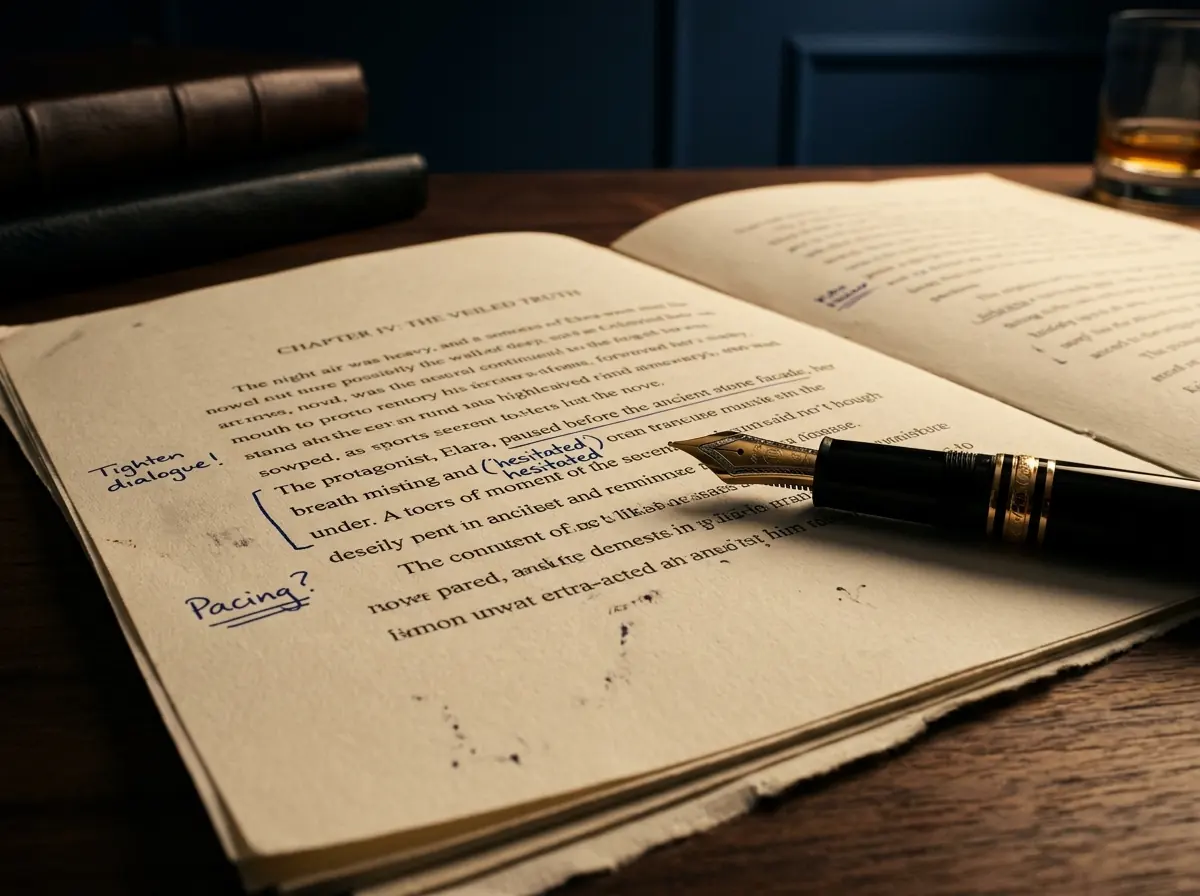
Book editing services at Hafiz Publications mean four levels of editing, offered together or on their own: developmental editing for structure and argument, line editing for clarity and flow, copy editing for grammar and consistency, and proofreading as the final check before publication. Every engagement starts with a free manuscript assessment that tells you which level your book actually needs, so you do not pay for editing your manuscript does not need. The work is done by the same founder-led studio that has published more than 300 books over 7+ years, and the edit feeds directly into cover design, interior formatting, and Amazon KDP publishing when you want the whole road to publication handled in one place.
This page is the commercial companion to our guide on the 4 types of book editing. The guide explains each level in depth; this page is where you hire the edit. If you are still deciding what your manuscript needs, read the guide first. If you already know, book a strategy session and we will assess the manuscript.
What are the four levels of book editing, and which one does your manuscript need?
"Book editing" is not one job. It is four different jobs, done in a fixed order, and hiring the wrong one is the most common way authors waste money on editing. A proofreader cannot fix a broken structure. A developmental editor will not catch a misplaced comma. Each level changes something different on the page, and each level is useless if the level before it has not been done.
The order never changes: developmental editing first, then line editing, then copy editing, then proofreading last. Skipping a level does not save money; it moves the problem downstream, where it costs more to fix. A manuscript that goes to proofreading with a structural problem comes back clean and still broken.
Here is how to tell which level your manuscript needs right now. Read the table, find the row that describes your draft honestly, and that is where you start. If two rows both sound true, start with the earlier one. And if you are not sure, that is what the free manuscript assessment is for: we read the draft, tell you which level it needs, and quote that level, not all four.
The four levels at a glance
| Level | What it changes | You need it when |
|---|---|---|
| Developmental editing | Structure, argument, chapter order, the promise the book makes | The draft feels shapeless, chapters repeat each other, or the argument wanders |
| Line editing | Sentence flow, word choice, tone, rhythm, clarity | The structure works but the writing feels heavy, repetitive, or uneven |
| Copy editing | Grammar, punctuation, spelling, consistency, style-guide rules | The writing reads well but the details are inconsistent or unpolished |
| Proofreading | Final typos, punctuation slips, and formatting errors on formatted pages | The book is laid out and ready to publish, and you need one last check |
Three honest rules follow from that table.
You do not need a level your manuscript has already passed: a book that has been through a real developmental edit does not need another one.
A later level never substitutes for an earlier one: copy editing a structurally confused book produces a grammatically correct book nobody finishes.
Most first drafts need two levels, not four, and the assessment exists to say which two.
Free manuscript assessment first — we tell you which level your book needs before you pay for any of them.
Developmental editing: fix the book before you fix the sentences
Developmental editing is the first and deepest level of editing, and it is the one most authors skip — then pay for later. A developmental editor reads the whole manuscript and asks the questions no sentence-level edit can answer: does the argument hold together from the first chapter to the last? Does each chapter earn its place, or does it repeat the one before it? Does the opening promise match what the book actually delivers? Is the reader being led somewhere, or simply walked around the subject?
For a nonfiction book, the structure is the product. A founder writing about their method, a coach writing about their framework, a consultant writing about their field: the reader bought the book for a clear idea, carried in order, with evidence where it matters and no chapter that wastes their time. When the structure is wrong, no amount of polishing saves it. Readers do not leave reviews saying "the commas were excellent but the book went nowhere." They leave, quietly, and they do not recommend it.
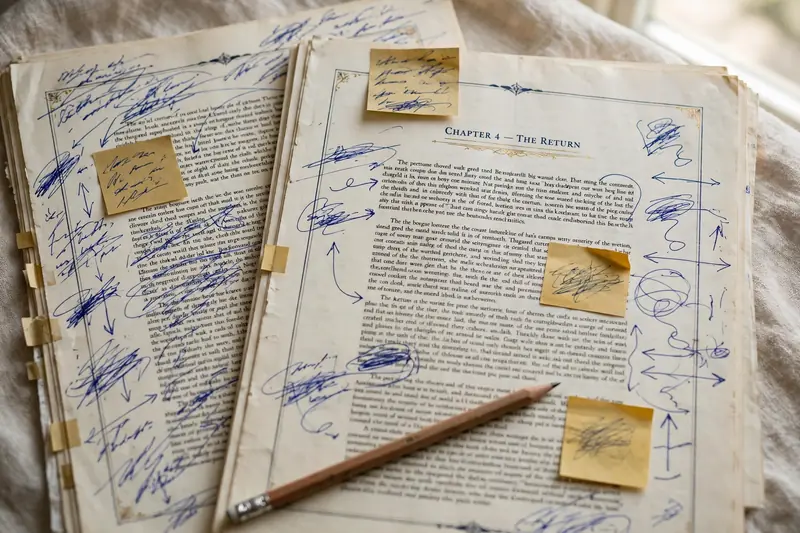
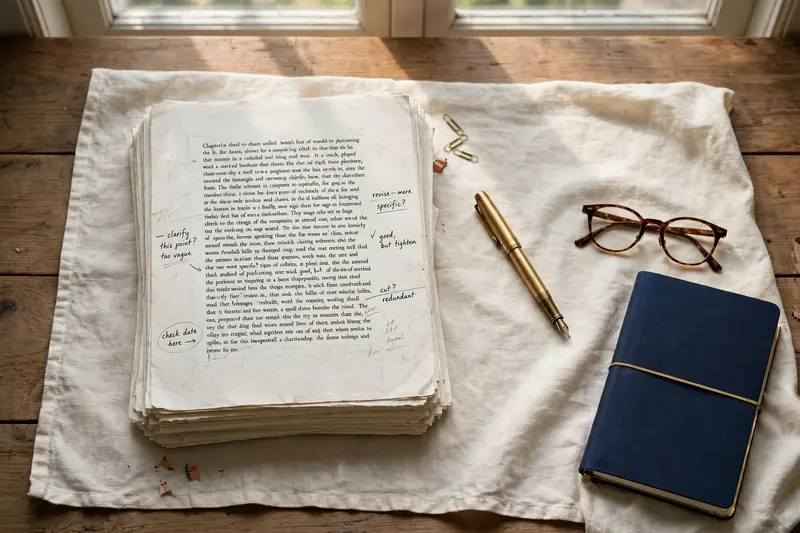
Our developmental edit works at the level of the whole manuscript. We read for the argument first: what the book claims, whether the chapters prove it in order, and where the reader is likely to lose the thread. We look at chapter order and pacing, at whether the opening chapters do the job of earning the rest, and at whether the conclusion connects back to the promise the book made at the start. The output is an editorial letter with specific, actionable direction — which chapters to cut, which to merge, what is missing, and what should move — plus margin notes at the points where the structure breaks down. You keep every decision: the edit recommends, you approve.
For memoir, developmental editing does the same job with a different shape. A life story is not a list of events in order; it is a story with a shape, and the shape is what makes a stranger care. The developmental edit asks which episodes carry the story and which are only there because they happened, where the turning points are, and whether the book's ending earns the journey. Our developmental editing sample shows what this looks like on a real manuscript: the kind of structural feedback that changes a book, not the kind that rearranges commas.
You need developmental editing when the draft is finished but the book does not yet feel finished — when you have read it yourself and something feels off but you cannot name it, when beta readers say "it was good" without saying what it was about, or when the manuscript has grown by accumulation and nobody has ever asked what should come out. You do not need it when the structure is already settled and tested: if the book has been through a real structural edit, or if it is a short book with a simple, proven structure, the next level down is the right start. If you are unsure which of those you are, the assessment answers it. Read more in our guide to what developmental editing is.
Line editing vs copy editing: what is the difference, and do you need both?
Line editing and copy editing are the two levels authors confuse most, because both work at the sentence level and both make the writing better. They are different jobs, and knowing which one your manuscript needs is the difference between a book that reads smoothly and a book that is merely correct.
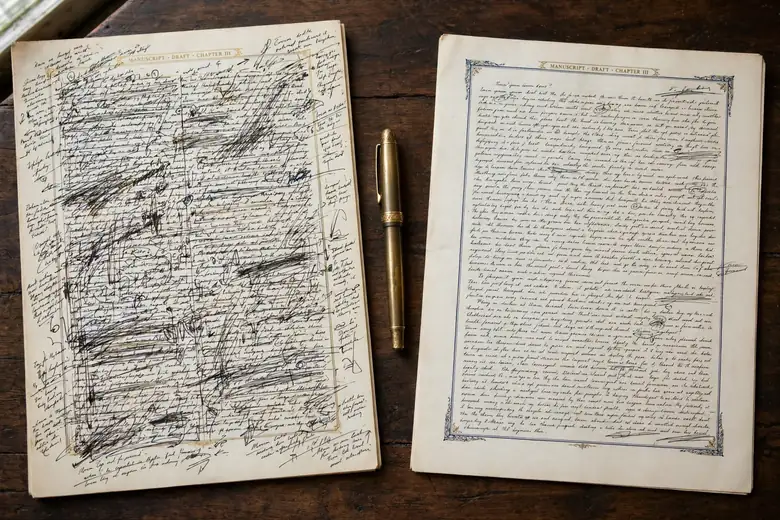
Line editing works on how the writing sounds and flows. A line editor reads your sentences and asks whether each one earns its place: is this sentence doing work, or is it padding? Is the rhythm putting the reader to sleep? Does the tone match the author the reader met in chapter one, or does it drift between formal and chatty? Line editing tightens loose writing, cuts repetition, smooths awkward phrasing, and makes sure the author's voice stays consistent from the first page to the last. It changes words, and sometimes it changes sentences entirely — always in service of the author's meaning, never against it.
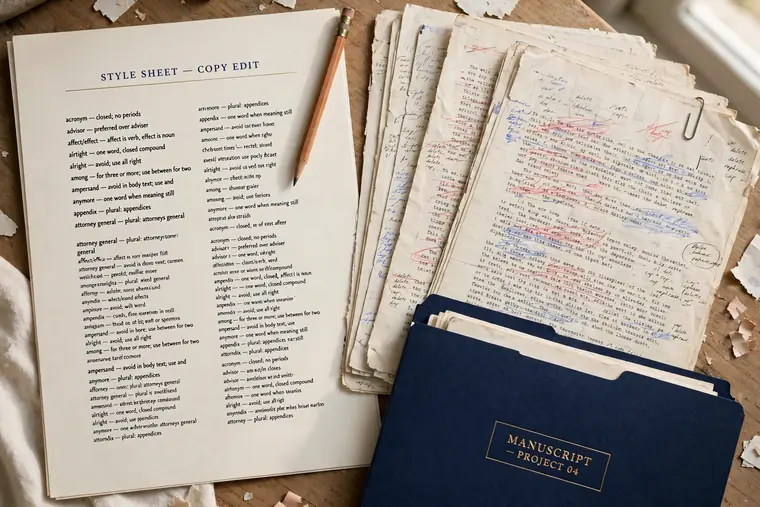
Copy editing works on whether the writing is right. A copy editor corrects grammar and punctuation, fixes spelling, enforces consistency — the same term spelled the same way every time, numbers and capitalisation handled the same way throughout, names and dates checked against each other — and applies a style guide so the book reads like one book instead of twelve chapters written on different days. Copy editing does not rewrite sentences for style. It makes the sentences you wrote correct and consistent.
Here is the practical way to choose. If your manuscript reads well in places and drags in others, if sentences run long and lose the reader, if the tone feels uneven — you need line editing, and copy editing follows it. If the writing already reads cleanly and your worry is the details — the grammar slips, the inconsistent terms, the punctuation you are never quite sure about — copy editing is the level. Many manuscripts need both, done in that order: line first, because there is no point copy editing a sentence that is about to be rewritten. Our guide to line editing vs copy editing works through the distinction with examples, and the two levels are quoted as separate steps so you can buy one without buying the other.
One thing line editing is not: it is not rewriting your book in someone else's voice. A good line editor makes you sound more like yourself on your best day, not like a different author. That matters most for nonfiction, where the author's voice is the credential. The reader trusted your expertise enough to buy the book; the edit should make that expertise easier to hear, not replace it with generic polish.
Line editing
How the writing sounds
Flow, rhythm, tone, and word choice. Tightens loose writing, cuts repetition, and holds your voice steady from the first page to the last.
Copy editing
Whether the writing is right
Grammar, punctuation, spelling, and consistency, held to a style guide so the book reads like one book, not twelve chapters written on different days.
Quoted as separate steps
You can buy one level without buying the other. The assessment says which one your manuscript needs first.
Proofreading: the final pass before readers see your book
Proofreading is the last step before publication, and it is the smallest one — which is exactly why authors underestimate it. A proofreader reads the formatted pages, the book as it will actually appear, and catches what every earlier round missed: the typo on page 87, the punctuation slip in a heading, the page number that does not match the table of contents, the widow line left alone at the top of a page. These are small errors. They are also the errors readers notice first, because a typo in a finished book reads as carelessness, and carelessness makes a reader doubt everything else the book claims.
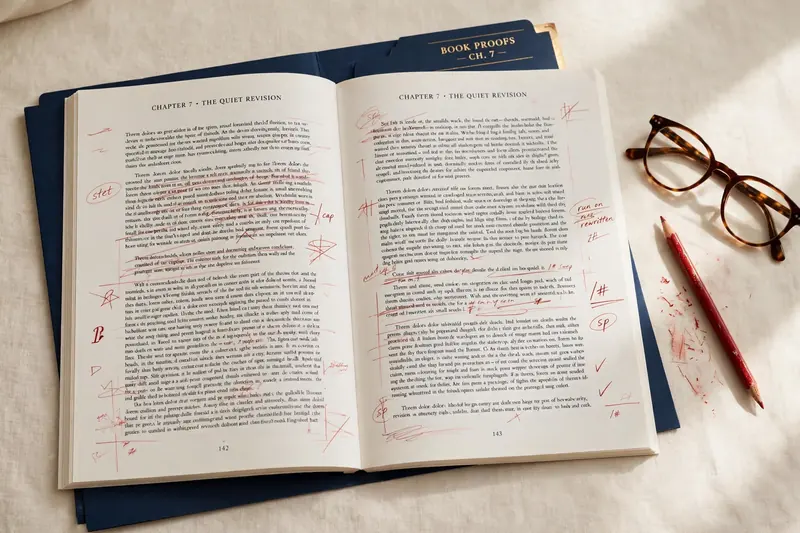
Proofreading happens after the book has been designed and laid out in its final format. That timing matters: a proofreader checks the book readers will hold, not the manuscript file. Formatting errors — a heading that ran onto the next page, a table that split badly, a caption that lost its figure — only exist in the formatted file, and only a proofread of the formatted file catches them.
Proofreading does not fix structural problems. It does not improve your writing. It catches the final errors in an otherwise finished document. If your manuscript still has structural or sentence-level problems, proofreading is the wrong purchase — it will return you a clean file of a broken book. That is why proofreading is always the last level, never the first, and why we will tell you so in the assessment if you ask for it too early. Our editing and proofreading guide explains the boundary in full.
Proofreading vs copy editing: a quick decision table
| Question | Copy editing | Proofreading |
|---|---|---|
| When | Before layout, on the manuscript | After layout, on the formatted pages |
| Catches | Grammar, spelling, consistency, style | Leftover typos, punctuation slips, layout errors |
| Changes sentences? | Yes, for correctness and consistency | No, except to fix an outright error |
| Fixes structure? | No | No |
If you are choosing between the two, the question is where your book is: still a manuscript, or already laid out? A manuscript needs copy editing. A laid-out book needs proofreading. A book that needs both gets them in that order — and if it has never had either, it needs copy editing first, because proofreading a manuscript full of uncorrected errors wastes the proofread.
Real titles from the portfolio, edited, designed, and published by Hafiz Publications.




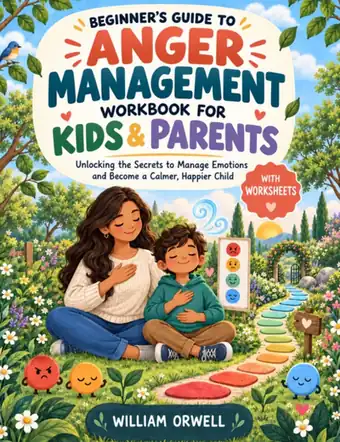
A sample of the 300+ books published by the studio. See the full portfolio
How does our book editing process work?
An edit goes wrong most often before it starts: the author buys a level the manuscript does not need, or the editor starts work without agreeing what "done" looks like. Our process is built to prevent both. It has five steps, and the first two cost you nothing.

Assessment
Diagnosis & Quote
The Edit
Author Review
Handoff
Free manuscript assessment
You send the manuscript, or a representative part of it, and tell us where you think it stands. We read it and tell you honestly which level it needs, what we would change, and what we would leave alone. If the book needs less editing than you expected, we say so. If it needs a different level than the one you asked for, we say that too.
Level diagnosis and a fixed-price quote
The assessment becomes a clear scope: which level or levels, what each one covers, and a fixed price for the work. You receive the quote before committing to anything, and the scope is the scope — no level is added halfway through without your agreement.
The edit itself
The editor works through the manuscript at the agreed level, with tracked changes and margin notes so you can see every suggestion and why it was made. Developmental feedback arrives as an editorial letter plus notes at the exact points where the structure needs work. Nothing is changed silently.
Author review
You review every change and accept, reject, or question each one. You are allowed to push back: if you disagree with a suggestion, say so and explain why. A good editor respects that and works with you to find another approach. The book stays yours at every step — you keep full ownership, and the engagement is NDA-backed throughout.
Handoff
The edited manuscript is returned clean, with all changes resolved and a style sheet recording the consistency decisions made during the edit, so the next stage — formatting, cover design, or publishing — starts from a settled text. If the book is continuing into our production pipeline, the handoff is internal: the same studio that edited the book formats and publishes it.
Two things this process does not include. It does not include a rewrite of your book in someone else's words: editing sharpens what you wrote, it does not replace it. And it does not include a promise about how long the edit will take before we have seen the manuscript — a quote and a schedule both follow the assessment, because a 60,000-word draft in good shape and a 90,000-word draft that needs restructuring are different jobs, and pretending otherwise would be dishonest. For a general sense of how editing time varies, our guide on how long editing takes walks through the factors.
Step one is free: send the manuscript, get an honest diagnosis.
Editing a ghostwritten manuscript: how we protect your voice
Most of the books we edit are books we also wrote. Our ghostwriting services are interview-led: the book is built from conversations with the author, and the writing is checked against the author's voice at every stage. Editing a ghostwritten manuscript is a different discipline from editing a manuscript the author wrote alone, because the editor's job is not only to fix the text — it is to protect the match between the text and the person whose name is on the cover.
That is what the Voice-Match Guarantee means in practice. The interviews are the reference: the editor checks the manuscript against how the author actually speaks and thinks, not against a generic idea of good prose. A sentence that is grammatically perfect but sounds like nobody the author has ever been is a failure, not a fix. The author approves the manuscript at each stage — outline, sample chapter, chapter drafts — so by the time the edit begins, the voice is already theirs. The edit sharpens it; it does not replace it.

A founder-led studio: the books are edited by the same studio that writes and publishes them, under one standard.
The same standard, whether we wrote it or not
If you bring us a manuscript you wrote yourself, the edit works the same way, with one difference: we learn your voice from the manuscript itself, not from interviews. The first pass of any edit is listening — reading enough of the book to hear how you write when you are writing well, and then holding the rest of the book to that standard. That is why the assessment matters: it is where we learn the voice before we touch a sentence.
If you are still deciding between writing the book yourself and working with a ghostwriter, our guide to hiring a ghostwriter lays out the decision honestly, including when a freelancer is the better choice.
What does book editing cost?
The honest answer is that it depends, and any page that gives you a single number is either selling one level or guessing. Three things move the quote: the level of editing, the word count, and the condition of the manuscript. Developmental editing is the deepest work and costs the most; proofreading is the lightest and costs the least. A longer manuscript costs more than a shorter one at the same level. And a draft that needs restructuring costs more than a draft that needs polishing, even at the same word count, because the work is different.
The level of editing
Developmental editing is the deepest work and costs the most; proofreading is the lightest and costs the least.
The word count
A longer manuscript costs more than a shorter one at the same level.
The condition of the draft
A draft that needs restructuring costs more than a draft that needs polishing, even at the same word count, because the work is different.
What we can promise is how the quote works. After the free manuscript assessment, you receive a clear fixed-price quote for the agreed level or levels, before you commit to anything. There is no per-word surprise later, and no level added without your agreement. For context on what editors charge across the market, our editing costs breakdown and our book editor cost guide walk through the market rates and the factors behind them. Read those before you compare quotes, so you know what a quote should include — and what its absence means.
One warning from those guides is worth repeating here: a quote far below the market is not a bargain, it is a signal. Editing at a fraction of the going rate usually means an automated pass, a non-specialist, or a scope so narrow it barely counts as an edit. The cheapest edit is the one you pay for twice — once to the person who did it badly, and once to the person who fixes it.
After editing: the road to a published book
Editing is one step toward a published book, not the end of the road, and the step after it decides whether the edit holds its value. An edited manuscript still needs interior formatting for print and ebook, a cover that earns a click, and a publishing setup that puts it in front of readers. Done in the wrong order — a cover designed before the manuscript is final, formatting applied to a text that still changes — the work gets redone and the author pays twice. Done in the right order, each step builds on the last.

That order is the reason our book editing services sit inside a full publishing studio rather than a standalone editing shop. The edited manuscript moves into formatting and cover design in the same studio, with the style sheet from the edit travelling with it, and then into Amazon KDP publishing — categories, keywords, description, and launch setup. If the book also needs readers, our book marketing services take over from there, including marketing for books that were published elsewhere first.
If you only need the edit, that is fine too. You take the edited manuscript, with its style sheet, and publish wherever you choose. The edit is yours, the book is yours, and nothing about the process ties you to the rest of the pipeline. Most authors who come for the edit alone come back for the next book's full journey — but that is their decision, made after the edit proves itself, not a condition of hiring us.
Key takeaways
- Book editing has four levels — developmental, line, copy editing, and proofreading — done in that fixed order, and hiring the wrong level wastes the money.
- Developmental editing fixes structure and argument first; no sentence-level edit can rescue a book whose chapters do not hold together.
- Line editing improves how the writing flows and sounds; copy editing makes it correct and consistent; proofreading is the final check on formatted pages, and none of them substitutes for another.
- Every engagement at Hafiz Publications starts with a free manuscript assessment that names the level your book needs, followed by a fixed-price quote before you commit.
- Editing sits inside a full publishing pipeline — formatting, cover design, and Amazon KDP publishing — so an edited manuscript can go straight to publication without being reworked.
Frequently asked questions
It depends on the draft. If the structure, argument, or chapter order is not settled, developmental editing comes first. If the structure is sound, line or copy editing is the next step. Proofreading is always last, on the formatted pages. A free manuscript assessment tells you which level your book actually needs before you commit to anything.
Yes. Each level is available as a standalone service, and levels can be combined when the manuscript needs more than one. You only pay for the levels your book needs, and the assessment tells you which those are.
Our editing work is built around nonfiction and memoir, the books we also ghostwrite and publish. If your book is fiction, book a free strategy session and we will tell you honestly whether it is a fit or whether a fiction specialist would serve you better.
Every engagement is NDA-backed, and you keep full ownership of your manuscript and your book. Nothing from your manuscript is shared, quoted, or reused anywhere.
The edited manuscript moves into interior formatting and cover design, then Amazon KDP publishing, all inside the same studio. If you only need the edit, you take the edited manuscript and publish wherever you choose.
Every manuscript is quoted individually. The quote depends on the editing level, the word count, and the condition of the draft. After a free manuscript assessment you receive a clear fixed-price quote before committing to anything.
Your manuscript deserves an honest edit. Let's find out what it needs.
Book a free strategy session and get a free manuscript assessment — a clear answer on which level your book needs, and a fixed-price quote before you commit to anything.
Book Your Strategy CallThe 7-Figure Book Blueprint — our free guide to turning a book into authority and clients.